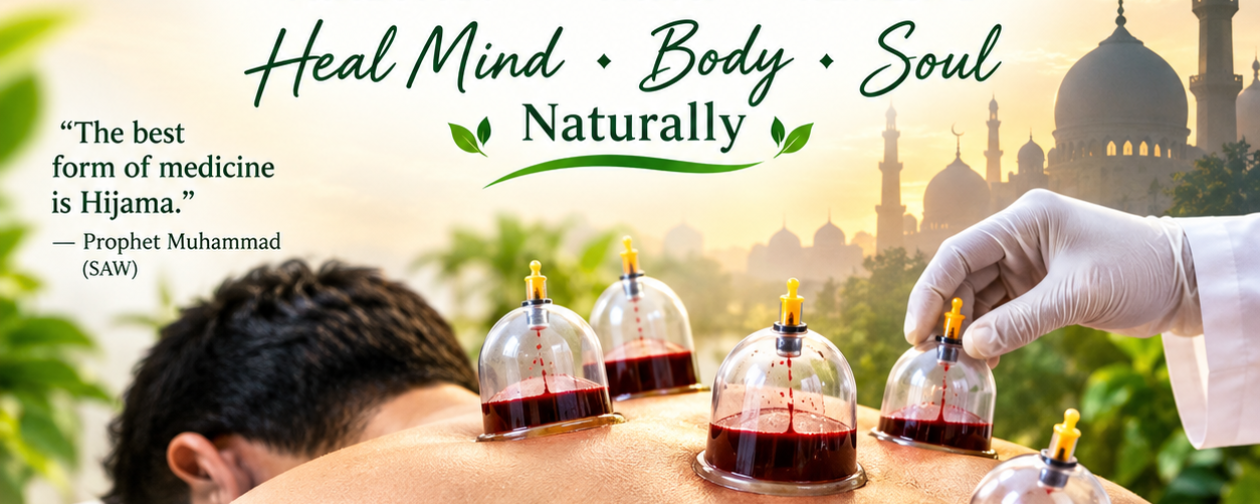
Welcome to Hijama & Science, an educational platform dedicated to exploring the relationship between traditional Hijama (cupping therapy) and modern scientific research.
Our purpose is to provide clear, informative, and evidence-aware content about cupping therapy, helping readers understand its traditional background, potential benefits, limitations, and safety considerations. We believe that traditional knowledge and scientific inquiry can be explored together through open-minded learning and responsible discussion.
Hijama & Science – Exploring Tradition Through Scientific Evidence
Ancient Wisdom. Modern Research. Responsible Wellness.
Hijama, also known as cupping therapy, is a traditional practice with a long history across different cultures. In recent years, it has attracted scientific interest as researchers investigate its potential effects, possible benefits, and safety.
At Hijama & Science, our purpose is to explore the connection between traditional knowledge and modern scientific research. We aim to provide clear, balanced, and evidence-informed information that helps readers understand what is currently known about Hijama—and what remains uncertain.
1. What Is Hijama?
Hijama is a form of cupping therapy in which cups are placed on the skin to create suction. It is commonly described in two forms:
- Dry Cupping: Suction is applied to the skin without making incisions.
- Wet Cupping (Hijama): Suction is combined with superficial skin incisions to draw a small amount of blood.
These methods differ in technique, potential risks, and the evidence available about their effects.
2. What Does Science Say About Hijama?
Scientific research has examined cupping therapy for several conditions, particularly pain-related symptoms. Some studies suggest that cupping may provide short-term relief for certain types of pain. However, the strength of the evidence varies, and limitations in study design make it difficult to draw firm conclusions about effectiveness.
Research into Hijama should be evaluated carefully, considering study quality, sample size, comparison groups, and whether results have been independently replicated.
An important principle: Traditional use and personal experiences can provide reasons for further investigation, but they do not, by themselves, establish that a treatment is effective.
3. Potential Benefits Under Investigation
Researchers have investigated cupping therapy in relation to:
- Certain types of muscle and musculoskeletal pain.
- Short-term changes in pain and perceived well-being.
- Possible effects on circulation and local tissue responses.
- Its role as a complementary approach alongside conventional care.
These areas of investigation should not be interpreted as proof of benefit. Evidence remains limited or uncertain for many claimed uses, and results may differ depending on the condition and treatment method.
4. Understanding the Science Behind Cupping
Cupping creates negative pressure that pulls the skin and underlying superficial tissues upward. This may produce temporary local changes in the skin and surrounding tissues.
Researchers continue to investigate how these physical effects relate to pain perception and other outcomes. Proposed mechanisms are not the same as established clinical benefits, and more high-quality research is needed to understand them fully.
5. Hijama, Blood, and Detoxification Claims
One common claim is that wet cupping removes toxins or impurities from the body. At present, there is insufficient reliable clinical evidence to establish that Hijama detoxifies the body or removes harmful substances in a way that improves health.
The human body already has organs, including the liver and kidneys, that play essential roles in processing and eliminating waste products. Claims about detoxification should therefore be assessed using specific, measurable scientific evidence rather than assumptions about the blood removed during Hijama.
6. Safety, Hygiene, and Responsible Practice
Safety is an essential part of any discussion about Hijama. Dry cupping can cause temporary marks, bruising, soreness, or skin irritation. Wet cupping carries additional risks because it involves skin incisions and blood exposure.
Potential complications include bleeding, infection, scarring, and—in repeated procedures—iron-deficiency anaemia. Proper infection control, sterile single-use equipment where appropriate, safe sharps disposal, and suitable practitioner training are particularly important for wet cupping.
People with bleeding disorders, anaemia, certain skin conditions, or other relevant health concerns should seek advice from a qualified healthcare professional before considering cupping therapy.
7. Traditional Knowledge and Modern Research
Traditional practices have cultural and historical significance, while scientific research provides methods for assessing safety and effectiveness. These perspectives can be explored together without assuming that every traditional claim is scientifically proven or dismissing a practice without examining the evidence.
At Hijama & Science, we encourage curiosity, critical thinking, accurate information, and respect for the limits of current knowledge.
8. Our Mission
Our mission is to make information about Hijama accessible and understandable by exploring published research, explaining potential benefits and risks, and distinguishing scientific findings from unverified claims.
9. Our Commitment to Evidence
We are committed to presenting information responsibly, acknowledging uncertainty, and avoiding exaggerated health promises. We aim to help readers ask informed questions and discuss complementary therapies with qualified healthcare professionals.
Our content is intended for educational purposes only and should not replace professional medical advice, diagnosis, or treatment.
Conclusion: Explore, Understand, and Make Informed Choices
Hijama has a long traditional history and continues to attract scientific interest. However, its effectiveness depends on the condition being considered, and the available evidence does not support every claimed benefit.
By combining respect for tradition with careful evaluation of research, we can develop a more balanced understanding of cupping therapy and make better-informed decisions about health and wellness.
Hijama & Science — Respecting Tradition, Examining Evidence, and Putting Safety First.
Our Mission
Our mission is to share accessible, research-informed information about Hijama and help people distinguish traditional beliefs, personal experiences, and scientifically supported findings.
Our Vision
Our vision is to encourage a deeper understanding of Hijama by bringing traditional knowledge into conversation with modern research, promoting informed decisions and responsible wellness practices.
What We Explore
- The Science Behind Hijama: Understanding how cupping therapy is performed and the proposed mechanisms behind its effects.
- Scientific Research: Exploring available studies and what current evidence can—and cannot—tell us.
- Potential Benefits: Examining reported benefits while presenting scientific findings accurately and objectively.
- Safety and Risks: Understanding possible side effects, contraindications, hygiene, and infection prevention.
- Tradition and Modern Knowledge: Exploring how traditional practices can be studied through scientific methods.
Our Approach
At Hijama & Science, we value accuracy, transparency, and critical thinking. We aim to present information without exaggerating health claims or promising guaranteed results. We recognize that scientific evidence varies across conditions and that further high-quality research is needed to establish the effectiveness of cupping therapy for many claimed benefits.
Our Commitment
We are committed to promoting health awareness, responsible learning, and evidence-based discussion. Our goal is to help readers ask informed questions, understand the available research, and make thoughtful decisions about their wellness.
Our educational content is intended for general information only and does not replace professional medical advice, diagnosis, or treatment. Readers should consult a qualified healthcare professional regarding individual health concerns.
Hijama & Science — Exploring Tradition Through Research, Knowledge, and Evidence.
Hijama & Science – Where Tradition Meets Modern Research
An ancient practice. A modern scientific perspective. A journey toward informed wellness.
For centuries, Hijama (cupping therapy) has been practised across different cultures as part of traditional wellness. Today, growing interest in complementary therapies raises important questions: How does Hijama work? What does scientific research say about its potential benefits? And what should people know about its safety and limitations?
At Hijama & Science, we explore these questions by bringing traditional knowledge into conversation with modern scientific research. Our goal is to make complex information easier to understand, separate established evidence from unproven claims, and encourage thoughtful, informed decisions about wellness.
We believe that understanding a traditional practice means looking beyond its history—examining the available evidence, acknowledging what remains uncertain, and keeping safety at the heart of every discussion.
Discover the tradition. Explore the evidence. Understand Hijama through science.
Hijama & Science – Where Tradition Meets Scientific Evidence
An ancient practice. Modern research. A commitment to evidence-informed understanding.
Hijama, commonly known as cupping therapy, has a long history in traditional healing practices. Today, it is also the subject of scientific research examining its possible effects on pain, physical symptoms, and overall well-being.
At Hijama & Science, we explore what research actually shows about cupping therapy, where findings remain uncertain, and what questions still require further investigation. We examine published studies critically, considering their quality, limitations, and relevance to real-world healthcare.
Some studies suggest that cupping may help reduce certain types of pain in the short term. However, the overall evidence remains limited or uncertain for many conditions, and the quality of available research varies. Claims that Hijama removes toxins, treats diseases, or improves health outcomes should not be presented as established scientific facts without reliable supporting evidence.
Our goal is to make scientific information accessible, distinguish promising findings from proven conclusions, and explain potential risks alongside possible benefits. We believe responsible discussion of Hijama requires respect for its traditional history as well as a clear understanding of the limits of current scientific knowledge.
Explore the tradition. Examine the evidence. Understand the limitations. Make informed decisions.
How to Become a Franchise Partner
Step 1 — Submit an Enquiry: Share your name, city, contact details, and business interest.
Step 2 — Initial Discussion: Learn about the proposed franchise model, eligibility, and available support.
Step 3 — Review the Proposal: Examine the fees, responsibilities, agreement, training arrangements, and operating requirements.
Step 4 — Documentation and Approval: Complete the required documentation and approval process.
Step 5 — Centre Planning: Plan your premises, training, equipment, and operations according to the agreed requirements.
Step 6 — Launch Preparation: Begin operations only after the necessary approvals, training, and setup requirements have been completed.
Welcome to The Indian Institute of Hijama Cupping Therapy & Healing House, a dedicated institute focused on Hijama and cupping therapy education, professional training, and complementary wellness practices.
Based in Paikpara, Kolkata, our aim is to preserve traditional knowledge while promoting structured learning, practical skill development, hygiene, and responsible care. We welcome individuals who wish to understand Hijama, develop their knowledge, or explore educational and business opportunities in the wellness sector.
Guided by the vision of Prof. Dr. M. Nurullah Ashraf, our institute seeks to create a supportive learning environment built around knowledge, compassion, discipline, and professional responsibility.
Our Mission
Our mission is to make Hijama and cupping therapy education accessible to aspiring practitioners and wellness professionals.
We aim to:
- Provide structured educational and practical training opportunities.
- Promote hygiene, infection prevention, and client safety.
- Encourage informed decisions through honest communication.
- Develop learners’ knowledge, confidence, and professional skills.
- Support responsible career and business development.
Our Vision
Our vision is to build a community that values traditional knowledge, responsible wellness practices, continuous learning, and service to others.
We believe that education should empower people to develop their abilities while understanding the responsibilities and limitations associated with therapeutic practices.
Our Training Programmes
We offer educational programmes designed for learners at different stages of their journey. Depending on the selected programme, topics may include:
- Diploma in Hijama Cupping Therapy
- Master in Hijama Cupping Therapy
- Master Diploma in Hijama Cupping Therapy
- Training Development Programme
Training topics may cover traditional Hijama principles, dry and wet cupping, relevant anatomy, hygiene, infection prevention, client consultation, contraindications, aftercare, and professional ethics.
Course duration, practical training, eligibility, assessments, and certificate details should be confirmed for each programme. Certificates should not be assumed to provide government recognition or professional authorisation.
Our Treatment Approach
Our approach places client comfort, privacy, cleanliness, and informed consent at the centre of the experience.
Our services may include traditional Hijama (wet cupping), dry cupping, and wellness consultations, subject to individual suitability and practitioner qualifications.
We aim to explain procedures, possible risks, aftercare, and the limitations of available evidence before clients make decisions. Cupping may provide temporary relief from certain types of muscle discomfort for some people, but evidence for many claimed benefits remains limited. It is not a substitute for necessary medical diagnosis or treatment.
Wet cupping involves skin incisions and blood exposure, so appropriate training, sterile single-use equipment, and strict infection-control precautions are essential.
Why Choose Healer House?
- Structured Hijama and cupping therapy education
- Practical learning opportunities where available
- Emphasis on hygiene and responsible practice
- A supportive and respectful learning environment
- Guidance for professional development
- Opportunities to enquire about centre setup and franchise partnerships
Our aim is to help every learner understand not only the techniques, but also the importance of safety, ethics, and professional responsibility.
Franchise and Business Opportunities
We also welcome enquiries from individuals interested in establishing a Hijama training centre or Healer House under our proposed franchise model.
Depending on the agreed package, franchise support may include training, centre setup guidance, curriculum support, branding resources, business development guidance, and mentorship.
Our published franchise information lists a franchise fee of ₹50,000 and an institute commission of 30% of agreed eligible income or revenue. Prospective partners should request written confirmation of the full investment, commission calculation, contractual obligations, support services, and operating requirements before making a payment.
Business earnings are not guaranteed and depend on location, demand, operating costs, management, and other factors.
Our Philosophy
We believe in a simple principle:
Learn with dedication. Practise with responsibility. Teach with integrity. Serve with compassion.
Our goal is to help people develop their knowledge and skills while encouraging realistic expectations, ethical conduct, and a responsible approach to traditional wellness practices.
Visit Our Institute
The Indian Institute of Hijama Cupping Therapy & Healer House
Address: 61/3 BT Road, Basghola, Paikpara, Kolkata – 700002, West Bengal, India
Phone: +91 90075 88855
Email: iamhijamatherapy@gmail.com
For enquiries about training programmes, treatment appointments, course fees, or franchise opportunities, please contact our team.
Discover the Art of Healing. Learn the Practice of Cupping. Build Your Future Responsibly.