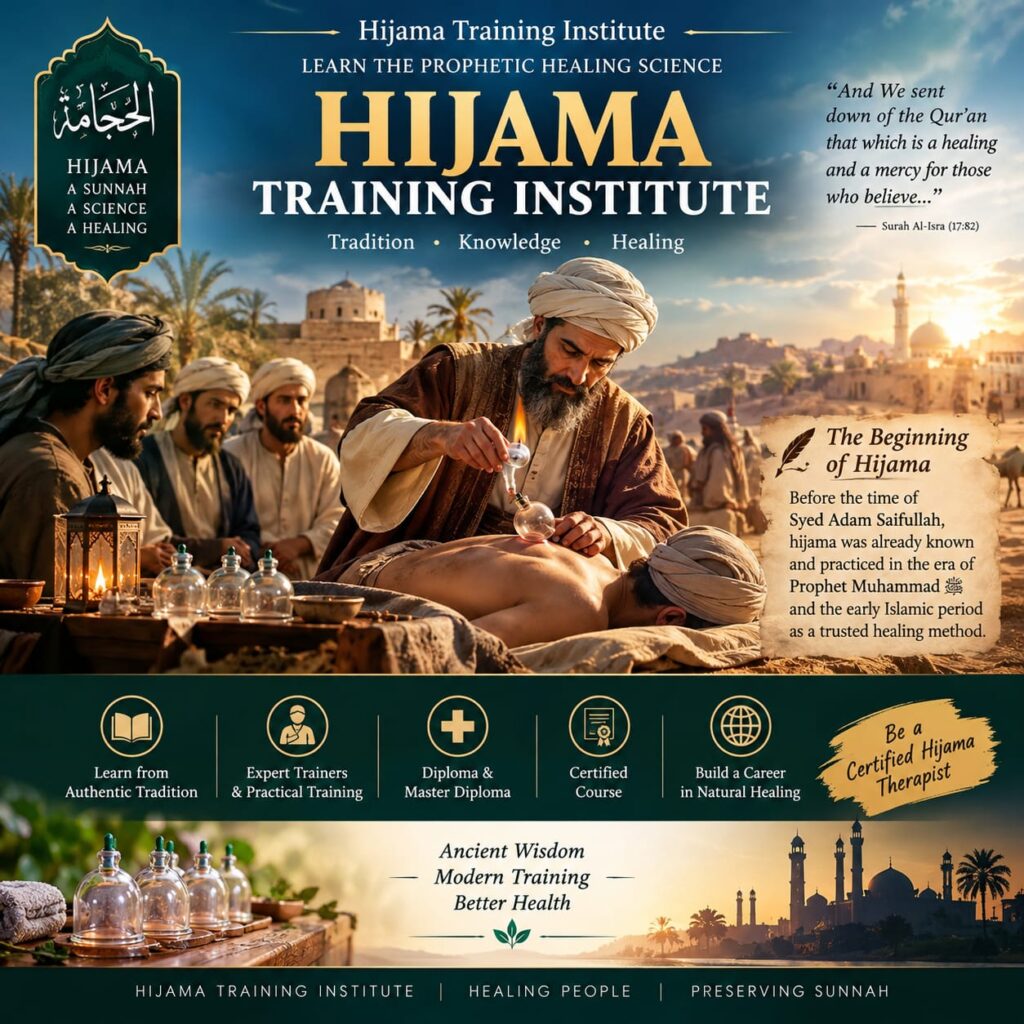
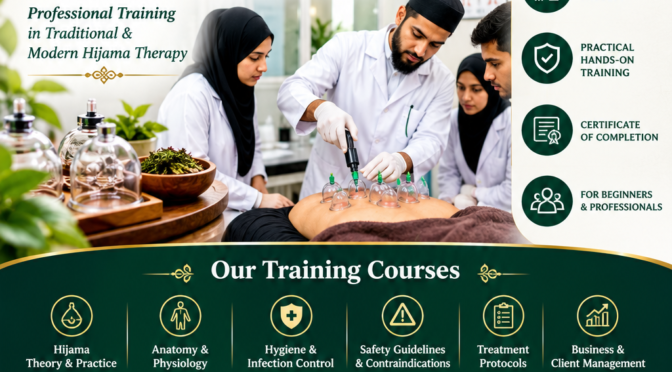
Welcome to The Indian Institute of Hijama Cupping Therapy & Healing House, an educational initiative dedicated to promoting knowledge, practical learning, and responsible practice of Hijama (cupping therapy).
Hijama has a longstanding history in traditional medicine and holds special significance in Islamic tradition. Our training initiative aims to help aspiring practitioners understand its historical background, basic principles, practical procedures, hygiene requirements, and safety considerations.
Whether you are beginning your journey in Hijama or seeking to expand your existing knowledge, our educational approach emphasises structured learning, supervised practice, professional responsibility, and respect for individual health needs.
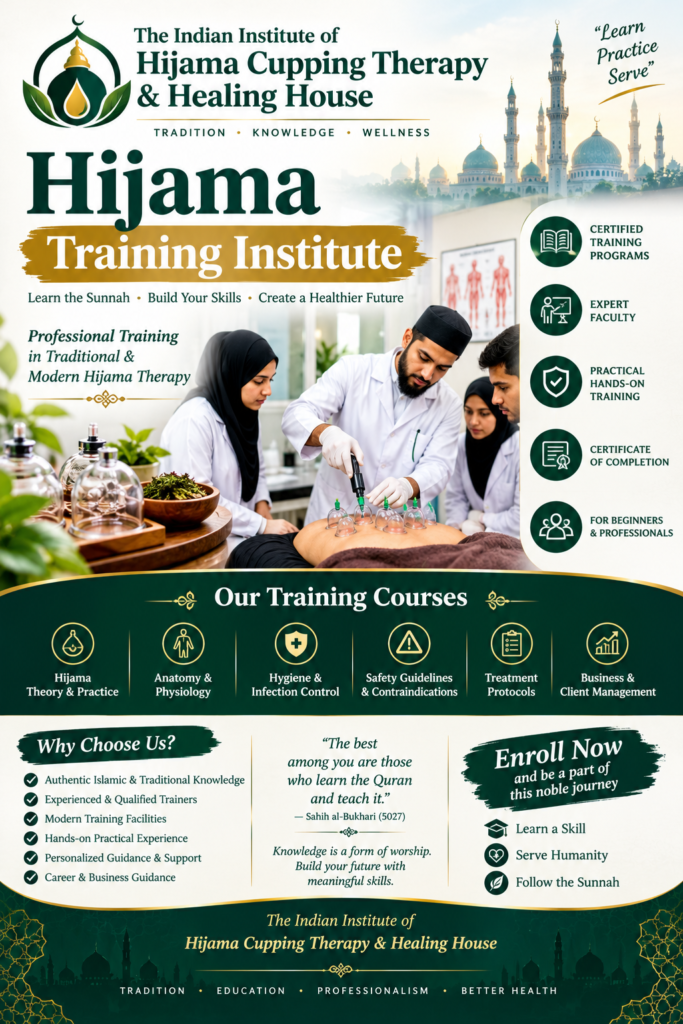
About Our Hijama Training Institute
Established in 2019, our institute is committed to sharing knowledge of Hijama and encouraging responsible learning in traditional cupping therapy.
We believe that effective training involves more than learning how to use cupping equipment. Students should also understand basic anatomy, appropriate hygiene, contraindications, informed consent, aftercare, and the limitations of complementary therapies.
Hijama Training Institute – The Indian Institute Of Hijama Cupping Therapy & Healing House
Our goal is to encourage learners to develop practical competence while recognising when a procedure is unsuitable and when referral to a qualified healthcare professional is necessary.
Our Mission
Our mission is to provide accessible, structured education in Hijama that combines traditional knowledge with safety-conscious practical instruction.
We aim to:
- Introduce learners to the history and principles of Hijama.
- Explain its significance in Islamic and traditional medical heritage.
- Develop an understanding of cupping techniques and equipment.
- Promote infection prevention and responsible treatment procedures.
- Encourage ethical conduct, informed consent, and client confidentiality.
- Help students understand the boundaries of their training and professional practice.
Our Vision
Our vision is to contribute to a knowledgeable and responsible Hijama community in which practitioners value education, hygiene, compassion, and continuous learning.
We encourage a balanced approach that respects traditional practices while acknowledging modern medical knowledge and the need for reliable evidence when making health claims.
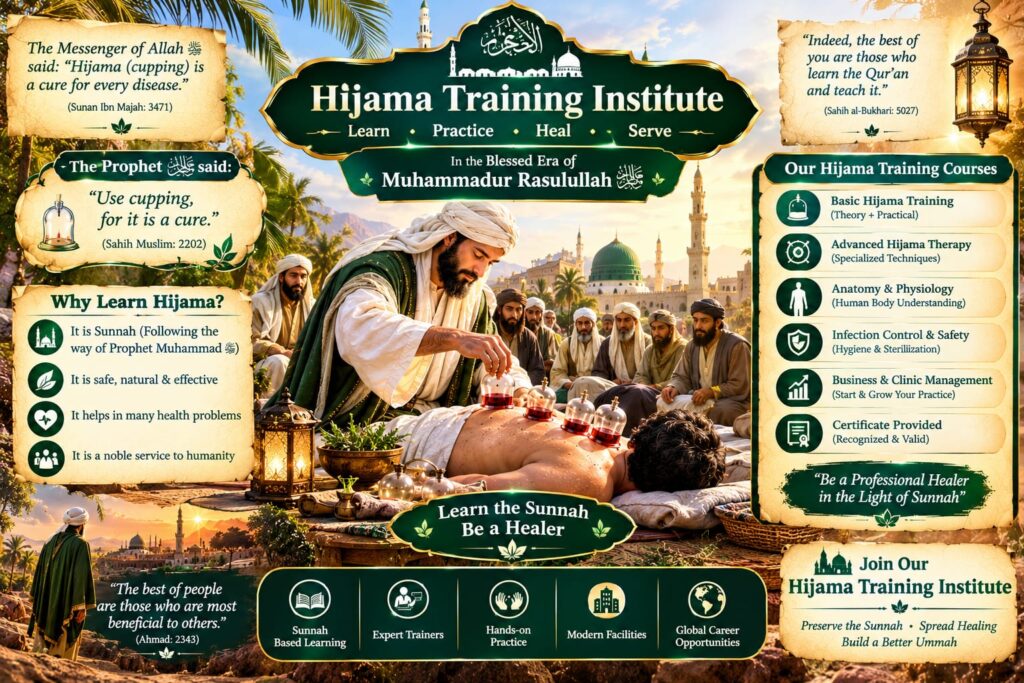
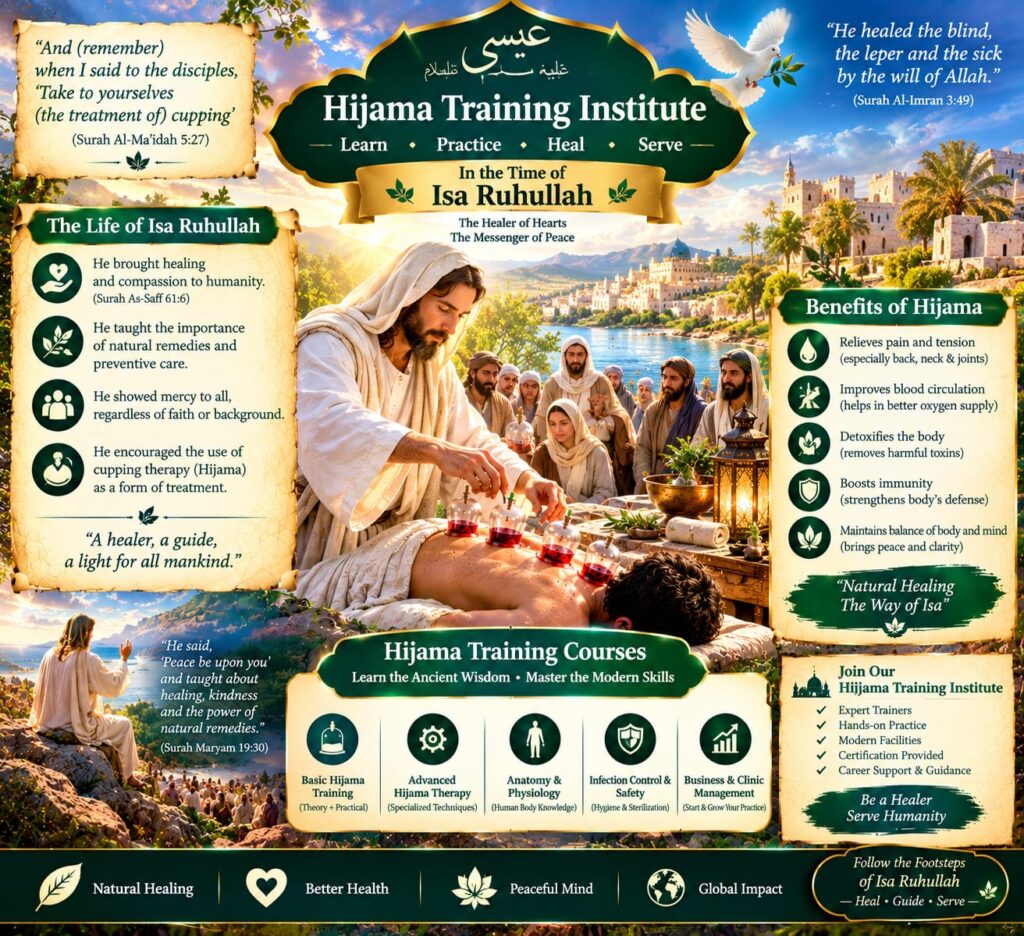
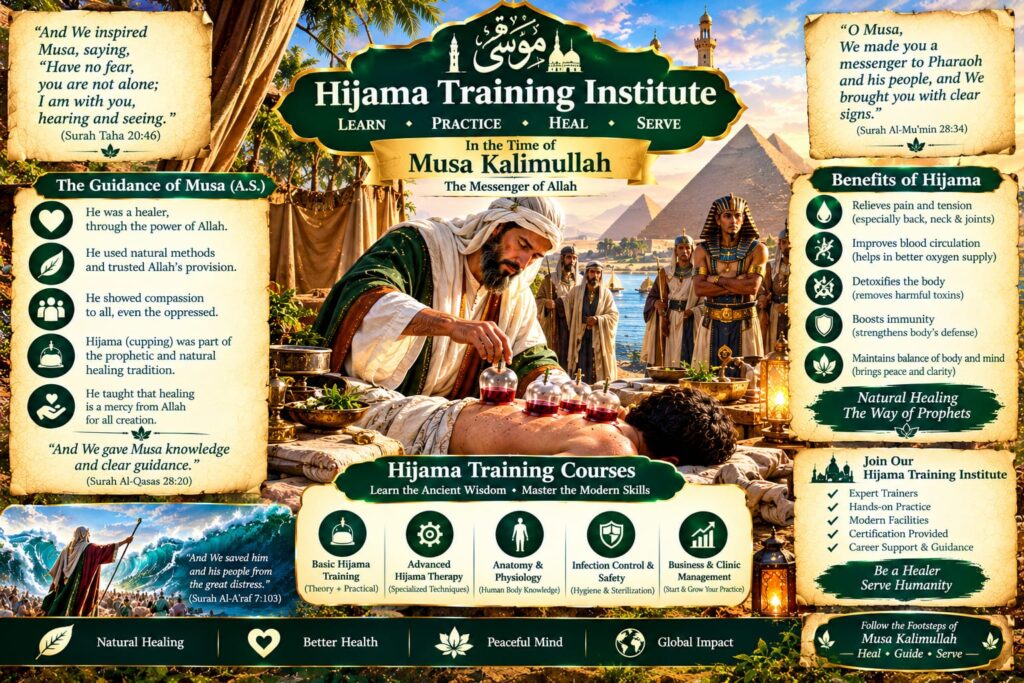
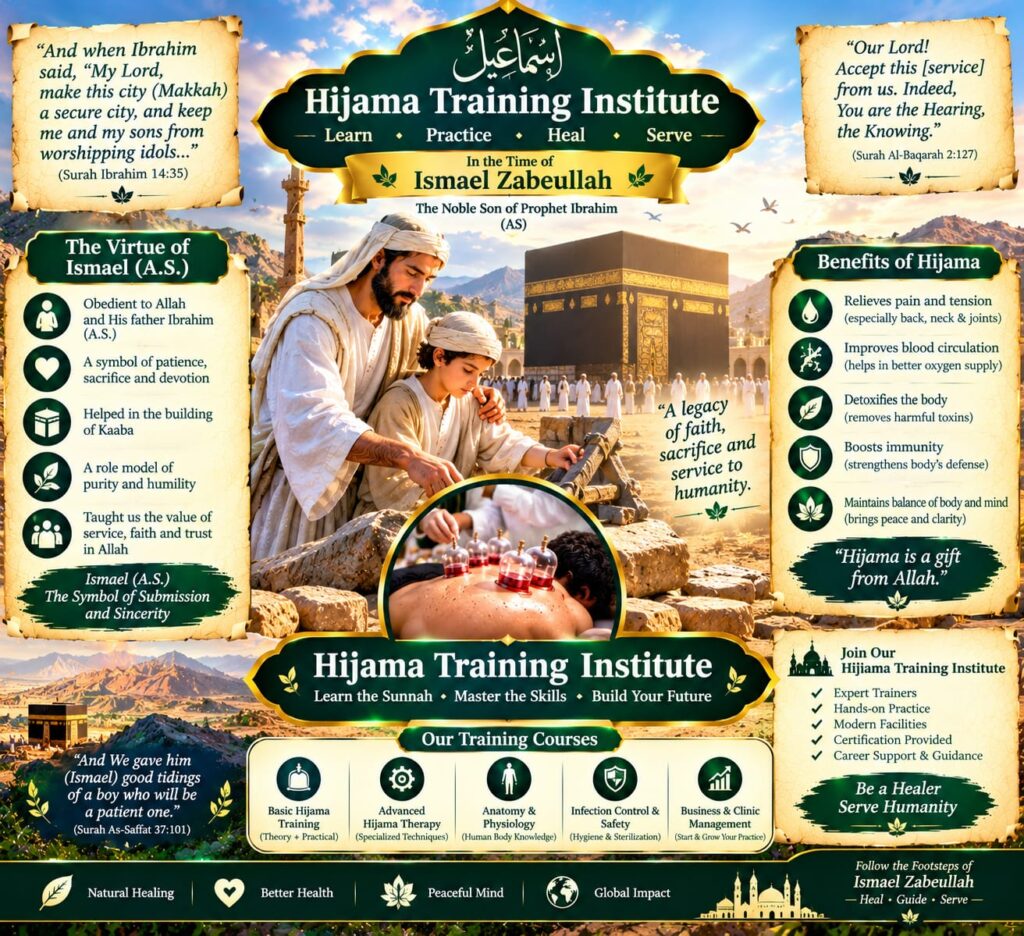
Our Hijama Training Courses
1. Beginner Hijama Training
Designed for newcomers who want to understand the fundamentals of cupping therapy.
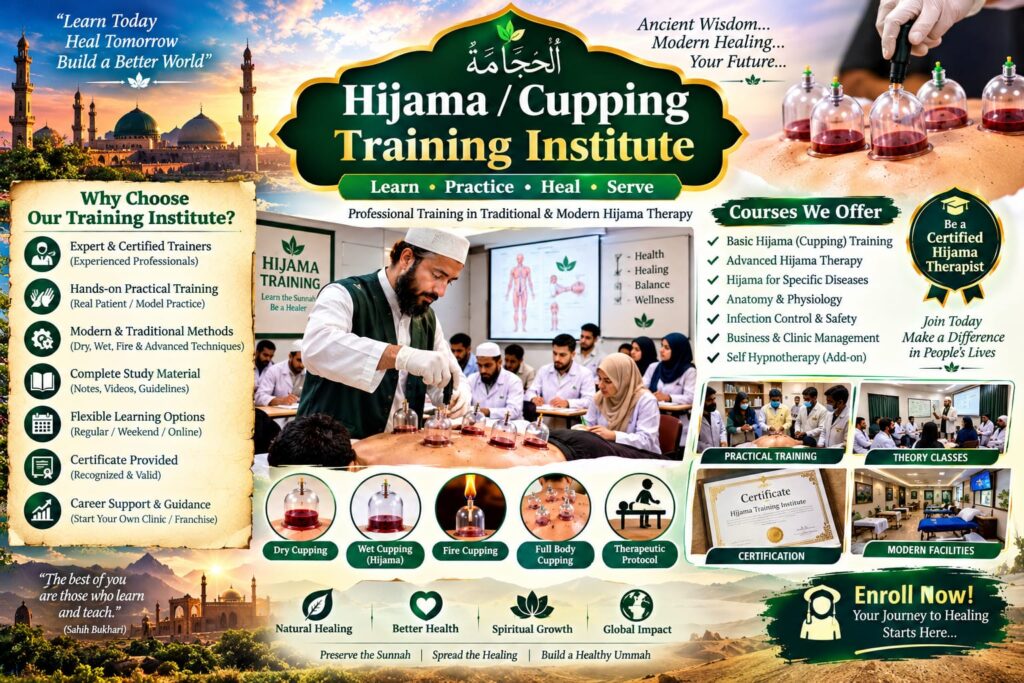
Topics include:
- Introduction to Hijama and its history.
- Dry cupping and wet cupping: key differences.
- Basic anatomy and physiology.
- Introduction to cupping equipment.
- Hygiene principles and infection prevention.
- Client assessment and informed consent.
- Aftercare and recognition of complications.
2. Practical Cupping Therapy Training
This module focuses on understanding equipment, treatment preparation, and safe practical techniques under appropriate supervision.
Learning areas include:
- Equipment selection and preparation.
- Skin assessment and treatment suitability.
- Cupping application and removal.
- Safe handling of blood and contaminated materials.
- Cleaning, disinfection, and disposal procedures.
- Documentation and aftercare guidance.
Wet cupping involves breaking the skin and should only be taught and practised under suitable supervision, with sterile single-use instruments and appropriate infection-control procedures.
3. Anatomy and Physiology for Hijama Practitioners
Understanding the human body is essential for responsible practice.
Hijama Training Institute – The Indian Institute Of Hijama Cupping Therapy & Healing House
Students are introduced to:
- Basic body systems and their functions.
- Skin structure and wound healing.
- Circulation and the role of blood.
- Muscles and common musculoskeletal complaints.
- Areas requiring additional caution.
- Recognition of situations that require medical referral.
This educational module does not qualify students to diagnose diseases or independently provide medical treatment.
4. Hygiene, Safety and Infection Control
Safety is a central part of our training philosophy.
Students learn about:
- Hand hygiene and protective equipment.
- Sterile, single-use instruments for wet cupping.
- Prevention of cross-contamination.
- Safe handling and disposal of blood-contaminated materials.
- Appropriate surface cleaning and disinfection.
- Bleeding, infection, scarring, and other possible complications.
- Emergency awareness and referral procedures.
5. Client Care and Professional Ethics
Responsible practice begins with respect for every individual.
This module covers:
- Explaining procedures and obtaining informed consent.
- Discussing possible benefits, risks, and alternatives.
- Maintaining confidentiality and accurate records.
- Respecting personal, cultural, and religious preferences.
- Recognising the limits of one’s competence.
- Avoiding exaggerated or unsubstantiated medical claims.
6. Professional Development and Practice Management
For learners interested in developing a professional service, introductory education may cover:
- Setting up appropriate client-care procedures.
- Maintaining hygiene and treatment records.
- Communicating clearly with clients.
- Understanding local business and regulatory requirements.
- Building trust through ethical service.
- Developing a plan for continued education.
Business guidance does not replace applicable licensing, registration, or other legal requirements.
What Will You Learn?
By completing the relevant training modules, learners should be able to explain the principles of Hijama, distinguish dry from wet cupping, understand basic safety procedures, recognise important contraindications, communicate risks appropriately, and identify situations requiring medical referral.
Practical competence depends on the course structure, supervised practice, assessment, and the learner’s demonstrated skills.
Who Can Join Our Training?
Our educational programmes may be suitable for:
- Beginners interested in learning about Hijama.
- Existing wellness practitioners seeking additional knowledge.
- Students interested in traditional and complementary therapies.
- Individuals wishing to understand the Islamic heritage of Hijama.
- Practitioners seeking further education in hygiene and safety.
Admission requirements, minimum age, prior qualifications, and eligibility to perform particular procedures should be confirmed for each course before enrolment.
Hijama Training Institute – The Indian Institute Of Hijama Cupping Therapy & Healing House
Why Choose Our Institute?
Tradition and knowledge: Explore Hijama’s historical and Islamic significance.
Structured education: Learn through organised topics and clear learning objectives.
Practical learning: Develop skills through demonstrations and supervised practice appropriate to the course.
Safety-focused instruction: Understand hygiene, infection control, contraindications, and aftercare.
Ethical approach: Learn to communicate responsibly and respect each client’s choices.
Continued development: Build a foundation for further learning and professional growth.
Course duration, trainer qualifications, assessment methods, and certificate recognition should be confirmed with the institute before registration.
Certification and Course Completion
Students who fulfil the applicable attendance, learning, and assessment requirements may receive a course-completion certificate where offered by the institute.
A training certificate does not automatically confer a government-recognised qualification, professional licence, or authority to diagnose or treat medical conditions. Students should verify the certificate’s recognition and applicable local requirements before enrolling or beginning professional practice.
Our Commitment to Safe and Responsible Training
We believe that learning Hijama carries a responsibility to protect the well-being of others.
Our educational approach emphasises informed consent, suitable hygiene procedures, proper supervision, transparent communication, and awareness of medical limitations.
Hijama is a complementary practice, and scientific evidence for many claimed benefits remains limited. Training should therefore include guidance on avoiding unsupported claims and ensuring that clients are not discouraged from seeking necessary medical care.
Frequently Asked Questions
Do I need previous experience to learn Hijama?
Beginner courses may be open to people without previous experience. Specific admission requirements should be confirmed with the institute.
Is practical training included?
Practical demonstrations or supervised sessions may be included, depending on the course selected. Confirm the exact practical components before enrolment.
Will I learn both dry and wet cupping?
Course coverage varies. Ask whether the programme includes both techniques and what supervision, equipment, and safety training are provided.
Will I receive a certificate?
A certificate may be provided after meeting the course requirements. Confirm its status, scope, and recognition before enrolling.
Can I start my own Hijama practice after training?
That depends on your demonstrated competence and applicable local laws, licensing, registration, and business requirements. A course-completion certificate alone may not authorise independent practice.
How do I enrol?
Contact the institute to confirm course dates, duration, fees, eligibility, training format, and available places before registering.
Begin Your Learning Journey
Take the first step towards understanding Hijama through structured education, practical learning, and a commitment to responsible wellness.
Hijama Training Institute – The Indian Institute Of Hijama Cupping Therapy & Healing House
Learn with Purpose. Practise with Care. Serve with Knowledge.
Enquire About Training Today
Contact the institute for current course schedules, fees, eligibility criteria, and enrolment information.
Important Notice: Hijama training is educational and does not replace recognised healthcare qualifications. Wet cupping carries risks, including bleeding and infection, and should only be performed by appropriately trained individuals where legally permitted and medically suitable. Always follow applicable laws and professional safety standards.
Comprehensive Education in Traditional Cupping Therapy
1. Understanding the Art and Practice of Hijama
Hijama is a traditional cupping practice that has been used in different cultures for generations. It is particularly meaningful within Islamic tradition because of its association with the Sunnah of Prophet Muhammad ﷺ.
Learning Hijama requires an understanding of its history, traditional principles, practical methods, and safety considerations. A responsible practitioner must know not only how a procedure is performed but also when it may be unsuitable.
Our educational approach encourages learners to develop a strong foundation in theoretical knowledge, supervised practical skills, hygiene, and ethical client care.
2. A Structured Learning Experience
A well-designed Hijama training programme should combine theoretical instruction, demonstrations, supervised practice, and competency assessment.
Theoretical Learning
Students explore the history of Hijama, its place in traditional and Prophetic medicine, basic anatomy, the principles of cupping, and the limitations of available scientific evidence.
Demonstration and Observation
Learners observe equipment preparation, client communication, treatment-area preparation, appropriate cup application, and safe removal techniques.
Supervised Practical Learning
Where included in the course, practical sessions help learners develop appropriate handling techniques under the supervision of a suitably qualified trainer. Wet cupping requires additional training in sterile technique, bloodborne infection prevention, sharps safety, and wound care.
Assessment and Feedback
Assessment may include written questions, practical demonstrations, observation checklists, and feedback on safety procedures. The specific assessment methods depend on the course offered.
3. Detailed Hijama Course Curriculum
Module 1: Introduction to Hijama
- Definition and historical background.
- Development of cupping across different cultures.
- Introduction to traditional and modern approaches.
- Common terminology and treatment methods.
- Responsible communication about potential benefits.
Module 2: Hijama in Islamic Tradition
- Introduction to Prophetic medicine.
- Relevant Quranic context and Hadith references.
- Understanding religious sources responsibly.
- Distinguishing religious significance from scientific evidence.
- Respecting individual beliefs and preferences.
Module 3: Basic Human Anatomy
- Structure and functions of the skin.
- Introduction to muscles and connective tissues.
- Basic understanding of circulation.
- Wound healing and the body’s protective barriers.
- Anatomical areas that require special caution.
Module 4: Cupping Techniques
- Introduction to dry cupping.
- Introduction to wet cupping.
- Understanding suction and cup placement.
- Equipment selection and preparation.
- Safe application and removal principles.
- Recognition of skin irritation and other adverse effects.
Module 5: Hygiene and Infection Prevention
- Handwashing and personal protective equipment.
- Skin preparation and sterile instruments.
- Prevention of cross-contamination.
- Blood exposure precautions.
- Sharps management and waste disposal.
- Cleaning and disinfection of reusable equipment where appropriate.
- Recordkeeping and incident reporting.
Module 6: Client Assessment and Contraindications
- Taking a relevant health history.
- Understanding consent and privacy.
- Recognising bleeding and infection risks.
- Identifying circumstances requiring medical advice.
- Understanding medication-related precautions.
- Referring clients to qualified healthcare professionals when necessary.
Hijama Training Institute – The Indian Institute Of Hijama Cupping Therapy & Healing House
Module 7: Aftercare and Follow-Up
- Explaining expected local skin effects.
- Basic wound-care principles after wet cupping.
- Recognising warning signs and complications.
- Advising clients when to seek medical attention.
- Maintaining accurate treatment records.
- Communicating follow-up instructions clearly.
Module 8: Professional Conduct
- Ethical communication.
- Client confidentiality.
- Maintaining professional boundaries.
- Respectful and culturally sensitive care.
- Avoiding unsupported promises or guaranteed-cure claims.
- Working within the limits of one’s competence.
4. Equipment and Training Materials
Understanding equipment is an important part of learning cupping therapy. Training should explain the intended use, limitations, cleaning requirements, and safe handling of each item.
Depending on the course, instructional materials may cover:
- Cupping cups and compatible suction devices.
- Gloves and appropriate protective equipment.
- Skin-preparation supplies.
- Sterile, single-use instruments for wet cupping.
- Approved sharps containers.
- Suitable medical-waste disposal arrangements.
- Cleaning and disinfection supplies.
- Client consent forms and treatment records.
- Aftercare instruction sheets.
Equipment must be selected and used according to appropriate safety standards and applicable local requirements. Items that penetrate the skin must never be reused between clients.
5. Understanding Contraindications and Treatment Risks
Safe Hijama practice begins with recognising that not everyone is an appropriate candidate.
Wet cupping may be unsuitable or require medical assessment for people with:
- Anemia or a history of significant blood loss.
- Bleeding disorders.
- Medicines that affect blood clotting.
- Active skin infections, open wounds, or certain skin conditions.
- Significant medical conditions affecting healing.
- Other circumstances in which blood loss or skin injury may create additional risk.
Training should explain how to identify concerns, when to postpone a procedure, and when to refer a person to a qualified healthcare professional.
Potential complications include bleeding, infection, scarring, skin irritation, and dizziness. Repeated blood loss can contribute to anemia.
6. Building Confidence Through Supervised Practice
Confidence should come from demonstrated competence, not simply from completing a short course.
Appropriate practical training may include:
- Observing the complete procedure.
- Preparing a clean and organised treatment environment.
- Explaining the procedure and obtaining informed consent.
- Demonstrating correct equipment handling.
- Applying infection-prevention principles.
- Recognising complications and responding appropriately.
- Completing treatment documentation and aftercare instructions.
Learners should receive constructive feedback and demonstrate the required skills before undertaking procedures independently, where independent practice is legally permitted.
7. Hijama and Professional Development
For individuals interested in complementary wellness services, education may be one step in a longer professional development journey.
Students should consider their existing qualifications, the scope of their training, local legal requirements, insurance obligations, and the level of supervision available to them.
A responsible professional understands the difference between providing a complementary therapy and diagnosing or treating a medical condition. Hijama training alone does not confer authority to practise medicine.
Hijama Training Institute – The Indian Institute Of Hijama Cupping Therapy & Healing House
8. Establishing a Responsible Hijama Practice
Learners interested in setting up a service should understand that professionalism involves more than equipment and treatment techniques.
Important considerations include:
Legal compliance: Check the rules governing cupping, skin-penetrating procedures, practitioner registration, and business operations in the relevant location.
Safe premises: Maintain an appropriate treatment environment with suitable handwashing facilities, clean surfaces, and safe equipment storage.
Infection control: Establish written procedures for instrument use, blood exposure, sharps disposal, and medical waste.
Client records: Maintain secure records of consent, relevant assessment information, procedures, and aftercare.
Honest communication: Explain the limits of the evidence and avoid claims that Hijama cures serious diseases or guarantees specific outcomes.
Professional development: Continue learning and seek appropriate clinical advice whenever a situation exceeds your competence.
9. Our Educational Philosophy
At The Indian Institute of Hijama Cupping Therapy & Healing House, we believe that meaningful education combines traditional knowledge with practical responsibility.
We encourage learners to approach Hijama with respect for its Islamic heritage, a commitment to safe procedures, and an understanding that scientific evidence continues to develop.
Our educational philosophy places importance on:
- Knowledge before practice.
- Safety before procedure.
- Consent before treatment.
- Honesty before promises.
- Continued learning throughout professional development.
These principles help learners appreciate both the significance and the responsibilities associated with traditional therapeutic practices.
10. Frequently Asked Questions About Training
How long does Hijama training take?
Course duration varies according to the curriculum, practical requirements, and assessment process. Contact the institute for current dates and duration.
Are beginners eligible?
Some introductory courses may accept beginners, subject to the programme’s admission criteria. Wet cupping requires additional safety training and must be taught within applicable legal and professional requirements.
Will the course include practical demonstrations?
Practical components depend on the specific programme. Ask whether demonstrations, supervised practice, and competency assessments are included.
Does the certificate guarantee employment?
No. A course-completion certificate does not guarantee employment, professional recognition, or permission to perform regulated procedures.
Can I learn Hijama for personal knowledge?
Educational programmes may be suitable for people interested in learning about the history, principles, and safety of cupping, subject to the course requirements.
Can Hijama replace medical treatment?
No. Hijama should not replace medical diagnosis, prescribed medication, or necessary treatment. Evidence for its benefits varies by condition, and many claims remain insufficiently supported.
11. Begin Your Journey with Knowledge
Whether you are exploring Hijama for educational purposes or seeking structured professional development, a strong foundation begins with accurate information, responsible instruction, and respect for individual safety.
At The Indian Institute of Hijama Cupping Therapy & Healing House, our goal is to encourage informed learning and responsible engagement with Hijama’s traditional heritage.
Learn with Purpose. Practise with Care. Continue with Knowledge.
Enquire About Our Hijama Training Courses
Contact the institute to confirm current course availability, curriculum, fees, eligibility, training arrangements, and certification details.
Please note: Course modules, practical sessions, and certificates are subject to the programmes actually offered by the institute. Training does not automatically provide professional licensure or government recognition. Wet cupping should only be performed by appropriately trained individuals where legally permitted and medically suitable.
Franchise and Business Opportunities
We also welcome enquiries from individuals interested in establishing a Hijama training centre or Healer House under our proposed franchise model.
Hijama Training Institute – The Indian Institute Of Hijama Cupping Therapy & Healing House
Depending on the agreed package, franchise support may include training, centre setup guidance, curriculum support, branding resources, business development guidance, and mentorship.
Our published franchise information lists a franchise fee of ₹50,000 and an institute commission of 30% of agreed eligible income or revenue. Prospective partners should request written confirmation of the full investment, commission calculation, contractual obligations, support services, and operating requirements before making a payment.
Business earnings are not guaranteed and depend on location, demand, operating costs, management, and other factors.
Our Philosophy
We believe in a simple principle:
Learn with dedication. Practise with responsibility. Teach with integrity. Serve with compassion.
Our goal is to help people develop their knowledge and skills while encouraging realistic expectations, ethical conduct, and a responsible approach to traditional wellness practices.
Visit Our Institute
The Indian Institute of Hijama Cupping Therapy & Healing House
Address: 61/3 BT Road, Basghola, Paikpara, Kolkata – 700002, West Bengal, India
Phone: +91 90075 88855
Email: iamhijamatherapy@gmail.com
For enquiries about training programmes, treatment appointments, course fees, or franchise opportunities, please contact our team.
Discover the Art of Healing. Learn the Practice of Cupping. Build Your Future Responsibly.