Hijama, also known as cupping therapy, holds an important place in Islamic traditional medicine. The practice is associated with the Sunnah of Prophet Muhammad ﷺ, who underwent cupping and spoke about its therapeutic value in authentic Hadith literature.
At The Indian Institute of Hijama Cupping Therapy & Healing House, we aim to help people understand the Islamic heritage of Hijama while encouraging responsible practice, proper hygiene, and awareness of modern healthcare.
Hijama in the Quran & Hadith – The Indian Institute Of Hijama Cupping Therapy & Healing House
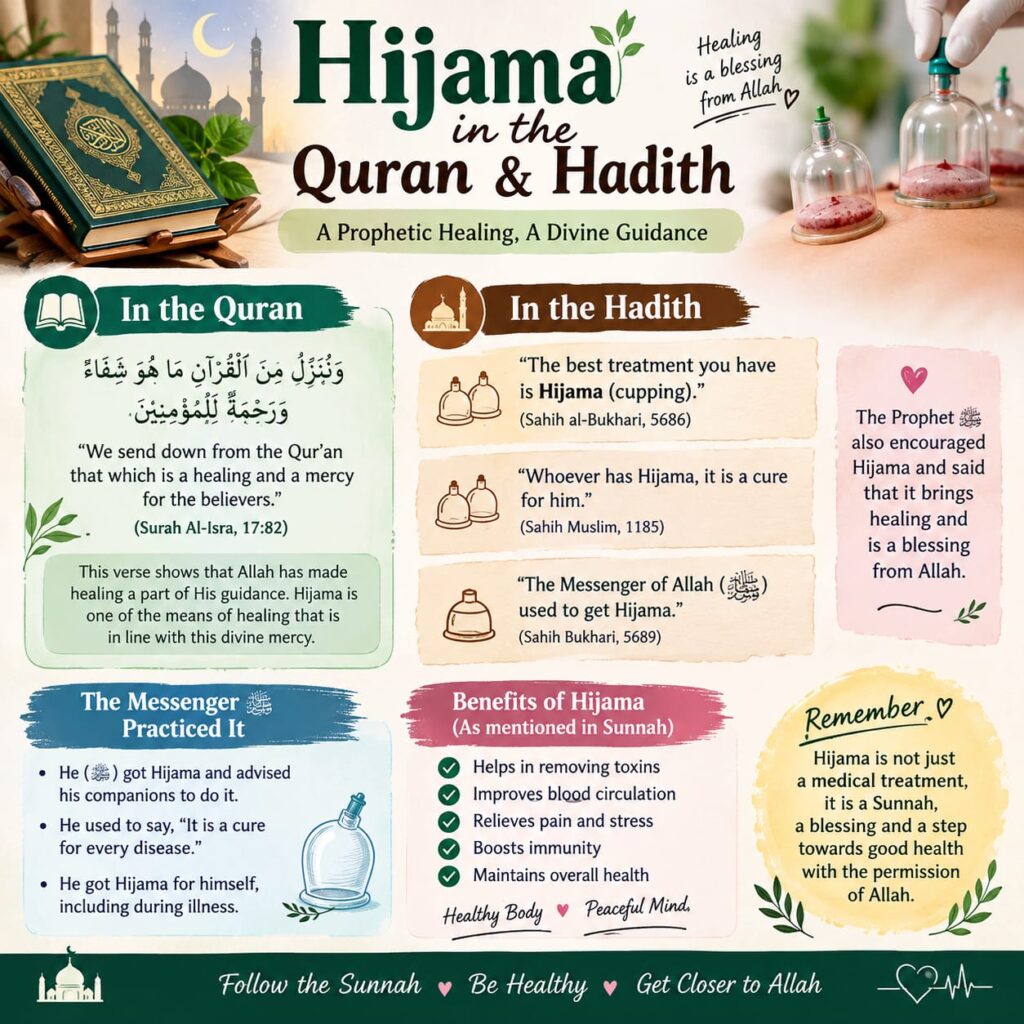
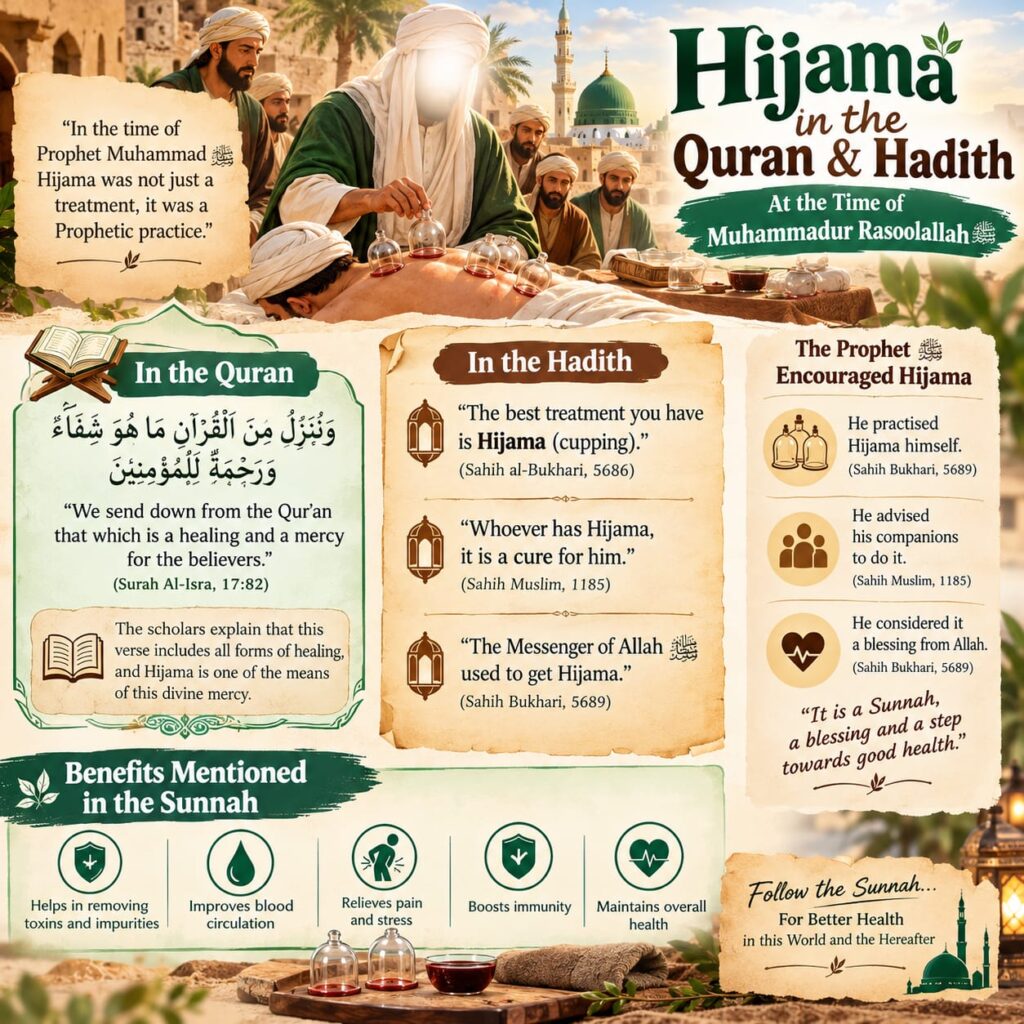
Hijama in the Holy Quran
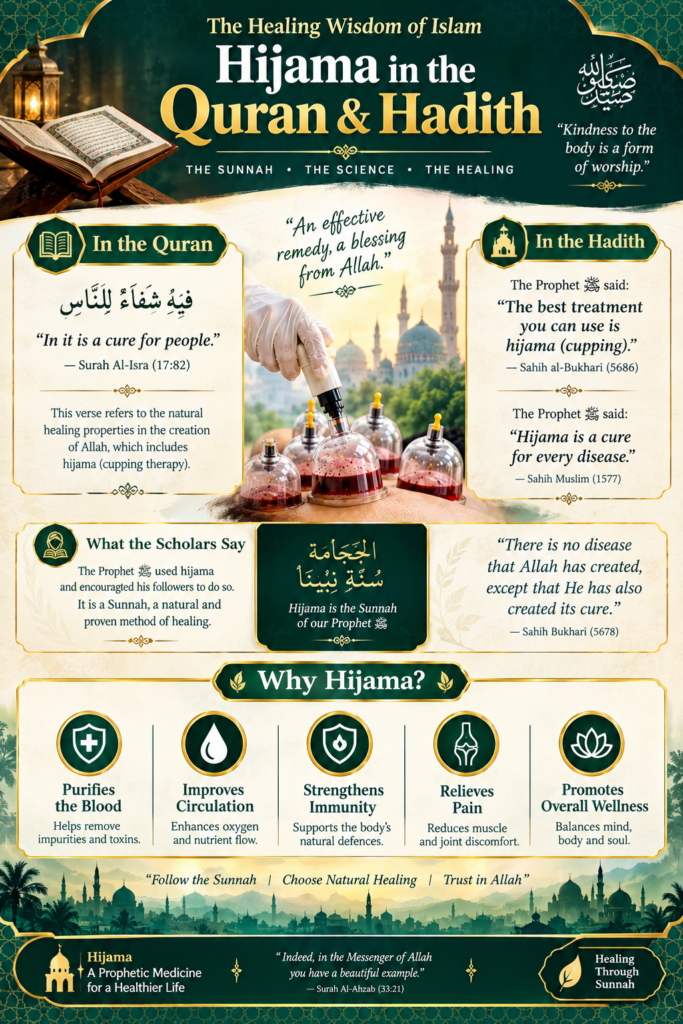
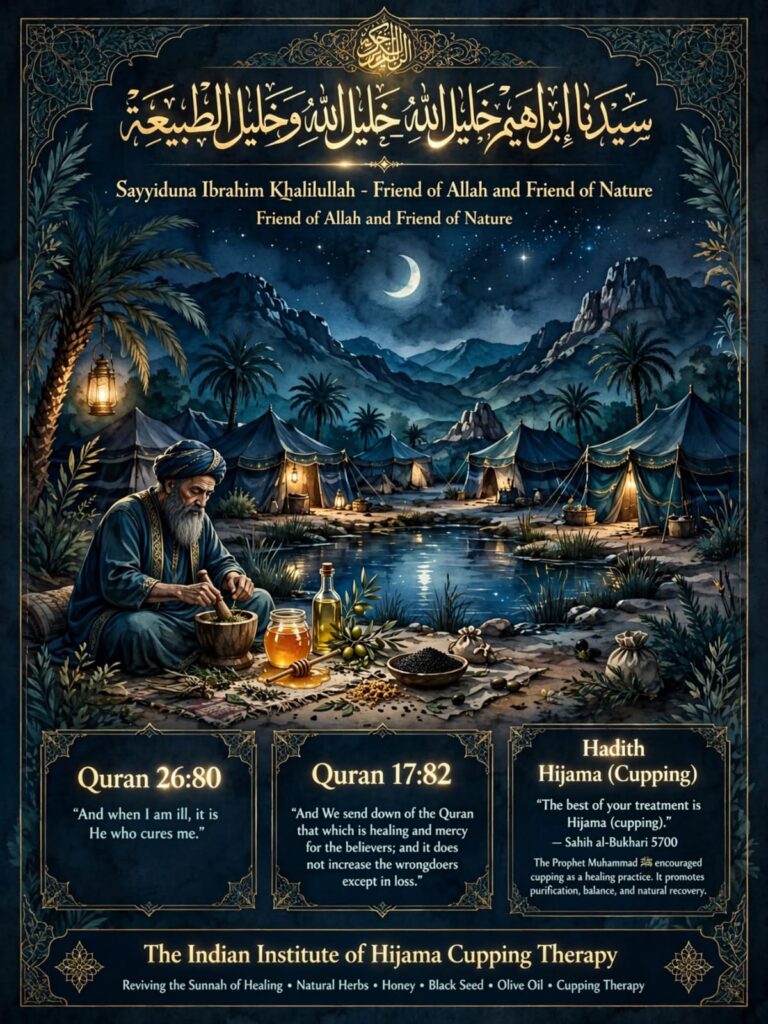
The Holy Quran encourages reflection on Allah’s creation and reminds believers that healing ultimately comes from Him. Surah Al-Isra (17:82) states:
“And We send down of the Quran that which is healing and mercy for the believers.”
This verse refers to the Quran as a source of healing and mercy. It does not specifically mention Hijama, but it provides a broader spiritual perspective on healing in Islam.
Hijama in the Hadith
Hijama is mentioned in several Hadith narrations. The Prophet Muhammad ﷺ underwent cupping, and authentic narrations describe its use as a therapeutic practice.
A Prophetic Tradition
Sahih al-Bukhari records narrations concerning the Prophet ﷺ receiving cupping treatment. These accounts have contributed to Hijama’s longstanding place in Islamic medical tradition.
For Muslims, Hijama can represent a connection to the Sunnah while reminding practitioners to approach treatment with knowledge, cleanliness, and care.
The Spiritual Significance of Hijama
Hijama is valued by many Muslims as part of the broader tradition of Prophetic medicine. Its significance extends beyond the procedure itself to include intention, personal responsibility, and respect for the body.
However, religious tradition and scientific evidence are different forms of understanding. While cupping therapy has been studied for certain health conditions, scientific evidence remains limited for many claimed benefits. Hijama should not be presented as a guaranteed cure for every disease or as a replacement for necessary medical treatment.
Hijama in the Quran & Hadith – The Indian Institute Of Hijama Cupping Therapy & Healing House
Why Choose Safe and Responsible Hijama?
- Respect for tradition: Understand Hijama within its Islamic historical context.
- Hygiene and safety: Wet cupping involves breaking the skin, so sterile, single-use equipment and appropriate infection-control practices are essential.
- Informed decisions: Discuss potential benefits, risks, and suitability with a qualified healthcare professional.
- Responsible care: Seek medical attention when symptoms require diagnosis or treatment.
Our Commitment
At The Indian Institute of Hijama Cupping Therapy & Healing House, we value the Islamic heritage of Hijama and the importance of responsible, hygienic practice. Our aim is to promote awareness through education that respects both religious tradition and evidence-informed healthcare.
Follow the Sunnah. Seek Knowledge. Practise with Care.
Remember: Healing is ultimately by the will of Allah. Hijama may be considered as a complementary practice where appropriate, but it does not replace professional medical advice, diagnosis, or treatment.
Preserving Tradition. Promoting Knowledge. Encouraging Responsible Wellness.
Welcome to The Indian Institute of Hijama Cupping Therapy & Healing House, an initiative dedicated to promoting awareness, education, and responsible practice of Hijama (cupping therapy). Rooted in the heritage of Prophetic medicine, our mission is to help people understand this traditional practice while maintaining a strong commitment to hygiene, safety, and informed healthcare choices.
Founded in 2019 by Certified Hijama Co-Director Prof. Dr. M. Nurullah Ashraf, our institute aims to preserve traditional knowledge and encourage the responsible development of Hijama education and practice.
Our Mission
Our mission is to make Hijama knowledge more accessible through education, awareness, and responsible therapeutic practice. We strive to respect Islamic traditions while encouraging careful attention to modern hygiene standards, practitioner training, and individual health needs.
Our Vision – Hijama in the Quran & Hadith
We envision a future in which traditional wellness practices are approached with knowledge, professionalism, compassion, and responsibility. Through awareness and education, we aim to help people make informed decisions about complementary therapies and their place in personal wellness.
Hijama in the Quran & Hadith – The Indian Institute Of Hijama Cupping Therapy & Healing House
Our Approach to Hijama
Hijama has a long history in traditional medicine and holds particular significance in Islamic tradition. We believe that understanding its heritage should go hand in hand with understanding its limitations, possible risks, and appropriate use.
Our approach emphasizes:
- Tradition and knowledge: Learning about Hijama’s historical and religious significance.
- Hygiene and safety: Promoting appropriate infection-control practices and sterile, single-use equipment for wet cupping.
- Education and training: Encouraging responsible learning and proper practical instruction.
- Individual care: Recognizing that Hijama may not be suitable for everyone.
- Informed wellness: Respecting modern medical advice and never presenting Hijama as a guaranteed cure.
Our Services
Our institute focuses on Hijama-related education, awareness, and complementary wellness services, which may include:
- Dry and wet cupping therapy, subject to individual suitability.
- Hijama workshops and educational training.
- Awareness sessions about traditional and Prophetic medicine.
- Guidance on hygiene, aftercare, and responsible practice.
Wet cupping involves making small breaks in the skin and carries risks, including bleeding and infection. Treatments should be performed only by appropriately trained practitioners using suitable safety procedures.
Our Commitment to Our Community
We aim to create a welcoming environment where people can learn about Hijama with confidence and ask informed questions about its practice. We value respectful care, transparency, cleanliness, and continued learning.
For female patients, we aim to provide a respectful and private treatment environment through appropriate female-practitioner arrangements.
Our Philosophy
We believe that traditional knowledge deserves careful study, that wellness requires responsible choices, and that every individual deserves respectful care. By bringing together Islamic heritage, education, and safety-conscious practice, we seek to contribute positively to the understanding of Hijama.
Healing Through Knowledge. Wellness Through Responsibility.
The Indian Institute of Hijama Cupping Therapy & Healing House
Honouring tradition. Advancing awareness. Encouraging safer wellness practices.
Medical Disclaimer: Hijama is a complementary practice and is not a substitute for medical diagnosis or treatment. Its benefits vary, and evidence for many claimed health effects remains limited. Consult a qualified healthcare professional before undergoing treatment, especially if you have a medical condition or take medication that affects blood clotting.
Exploring the Sunnah, Islamic Heritage & the Wisdom of Healing
Hijama, commonly known as cupping therapy, has a long history in traditional medicine and holds a special place in Islamic tradition. The practice is associated with Prophet Muhammad ﷺ, and authentic Hadith narrations describe his use of cupping.
For many Muslims, Hijama represents a connection to the Sunnah and an opportunity to learn more about Prophetic medicine. At The Indian Institute of Hijama Cupping Therapy & Healing House, we aim to share this heritage through education, respect for Islamic teachings, and a commitment to safe and responsible practice.
Hijama in the Quran & Hadith – The Indian Institute Of Hijama Cupping Therapy & Healing House
1. Hijama in the Holy Quran
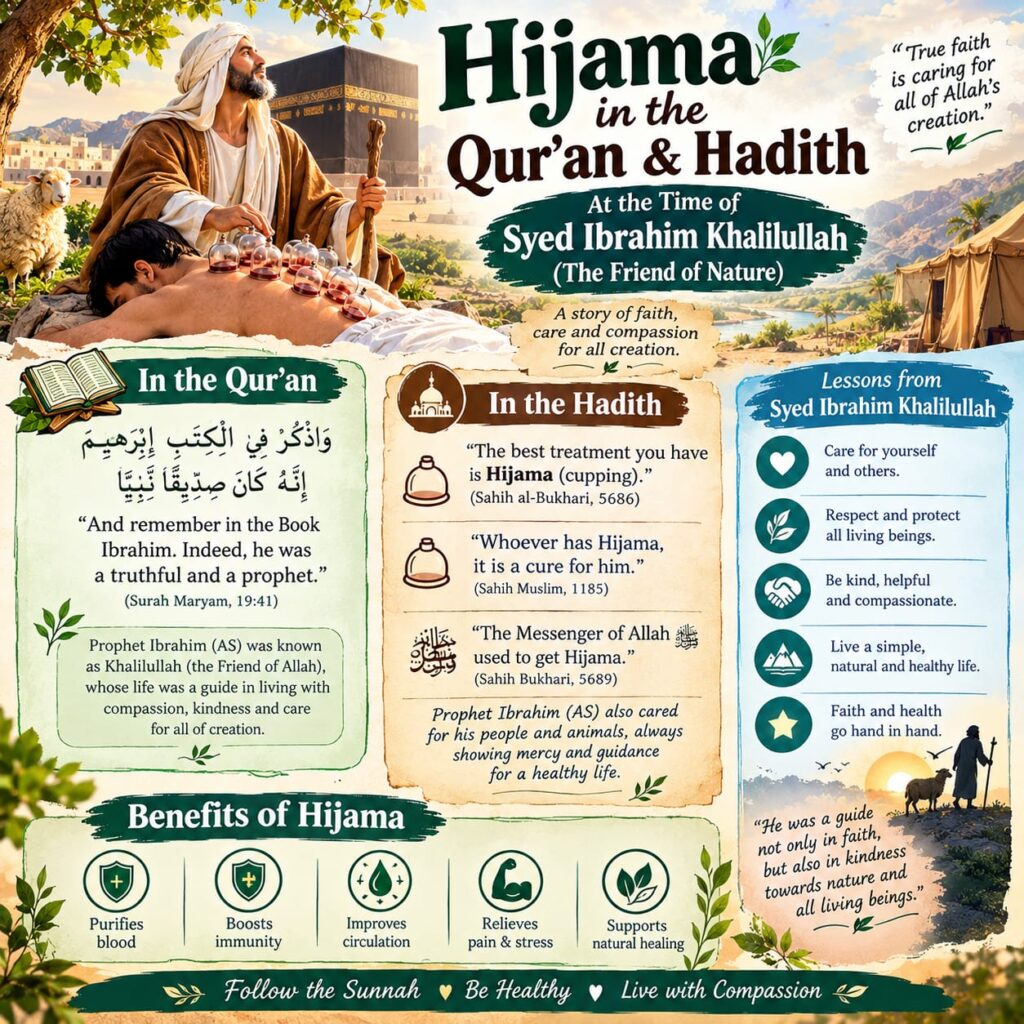
The Holy Quran speaks about healing, mercy, and the importance of reflecting on Allah’s creation. However, the Quran does not explicitly mention Hijama by name.
One verse often discussed in relation to healing is:
Surah Al-Isra (17:82)
“And We send down of the Quran that which is healing and mercy for the believers.”
This verse describes the Quran as a source of healing and mercy. It should not be interpreted as a direct reference to cupping therapy. Rather, it offers a broader spiritual perspective on healing and faith in Islam.
Muslims are encouraged to seek beneficial knowledge, take responsible steps to care for their bodies, and remember that ultimate healing is by the will of Allah.
2. Hijama in the Hadith
Unlike the Quran, Hadith literature contains direct references to cupping. Several authentic narrations describe the Prophet Muhammad ﷺ undergoing Hijama.
Cupping as a Prophetic Practice
Sahih al-Bukhari records narrations about the Prophet ﷺ receiving cupping treatment. These reports are an important part of the historical and religious basis for Hijama in Islamic tradition.
The practice has consequently been preserved and studied by generations of Muslim scholars, practitioners, and communities.
Understanding the Hadith Responsibly
Hadith narrations should be understood in their proper context, including their wording, authenticity, and scholarly interpretation. Statements about Hijama should not be used to promise a cure for every illness or to discourage people from seeking appropriate medical care.
Islamic teachings encourage believers to seek beneficial treatment while placing their trust in Allah.
3. The Importance of Hijama in Prophetic Medicine
Prophetic medicine refers to health-related practices and guidance discussed in Islamic texts and scholarly traditions. Hijama is one of the practices associated with this heritage.
Its importance to many Muslims includes:
- Religious significance: A practice connected with the Sunnah of the Prophet Muhammad ﷺ.
- Historical heritage: A traditional therapy used across generations and cultures.
- Personal wellness: An option some people consider as a complementary therapy.
- Responsible care: An opportunity to combine cultural understanding with appropriate hygiene and informed healthcare decisions.
Respecting a traditional practice also means understanding its limitations and avoiding unsupported medical claims.
4. What Does Modern Science Say About Hijama?
Hijama has been investigated in scientific studies for a range of conditions, including certain types of pain. Some studies suggest possible benefits, but the quality and consistency of the evidence vary, and stronger research is needed to establish its effectiveness for many conditions.
Wet cupping involves making small cuts or punctures in the skin to draw blood into a cup. Because it breaks the skin, it carries risks such as bleeding, infection, scarring, and, with repeated procedures, anemia.
Hijama should not be considered a proven method for removing all toxins, purifying the blood, strengthening immunity, or curing every disease. It should not replace prescribed medication, medical diagnosis, or evidence-based treatment.
5. The Importance of Safety and Hygiene
A traditional therapy must be practised responsibly. Anyone considering Hijama should understand the procedure, its potential benefits, and its risks before making a decision.
Essential safety principles include:
- Using sterile, single-use equipment for wet cupping.
- Following appropriate hand hygiene and infection-control procedures.
- Ensuring the practitioner has suitable training and practical competence.
- Assessing individual health conditions and bleeding risks before treatment.
- Avoiding treatment when medically unsuitable and seeking professional advice when necessary.
- Following clear aftercare instructions and obtaining medical attention if complications occur.
People with bleeding disorders, anemia, certain skin conditions, or other relevant medical concerns should consult a qualified healthcare professional before undergoing wet cupping.
6. Our Commitment to Islamic Heritage and Responsible Practice
At The Indian Institute of Hijama Cupping Therapy & Healing House, we value the religious and historical significance of Hijama and believe that education is essential to responsible practice.
Our aim is to help individuals understand the connection between Hijama and Islamic tradition while promoting hygiene, informed decisions, practitioner responsibility, and respect for modern healthcare.
We encourage our community to approach Prophetic medicine with sincerity, seek reliable religious knowledge, and make health decisions with appropriate professional guidance.
Conclusion: Tradition, Faith & Knowledge
Hijama remains an important part of Islamic medical heritage for many Muslims. Its connection with the Sunnah gives it religious significance, while modern research helps us examine its possible therapeutic applications and limitations.
By learning from authentic Islamic sources, understanding scientific evidence, and prioritising safe practice, we can approach Hijama with respect, knowledge, and responsibility.
Hijama in the Quran & Hadith – The Indian Institute Of Hijama Cupping Therapy & Healing House
Follow the Sunnah. Seek Knowledge. Practise with Care.
The Indian Institute of Hijama Cupping Therapy & Healing House
Honouring Islamic tradition. Promoting awareness. Encouraging responsible wellness.
Medical Disclaimer: This content is for educational purposes only and does not constitute medical advice. Hijama is a complementary practice, and evidence for many claimed benefits remains limited. Consult a qualified healthcare professional before treatment and never delay necessary medical care.
The Spiritual Heritage of Prophetic Medicine
Introduction: Understanding Hijama Through Faith and Knowledge
Hijama, commonly known as cupping therapy, is a traditional therapeutic practice with a long history across different cultures. Within the Muslim community, it holds particular significance because of its association with Prophet Muhammad ﷺ and its mention in authentic Hadith literature.
For generations, Muslims have explored the teachings of the Quran and Sunnah to understand matters of faith, daily life, and personal well-being. Hijama is one of the practices discussed in the broader tradition of Prophetic medicine, often referred to as Al-Tibb al-Nabawi.
At The Indian Institute of Hijama Cupping Therapy & Healing House, we aim to present the religious heritage of Hijama with respect, clarity, and responsibility. Our approach recognises the importance of authentic Islamic sources while encouraging awareness of modern scientific research, professional healthcare, and safe therapeutic practices.
1. What Is Hijama?
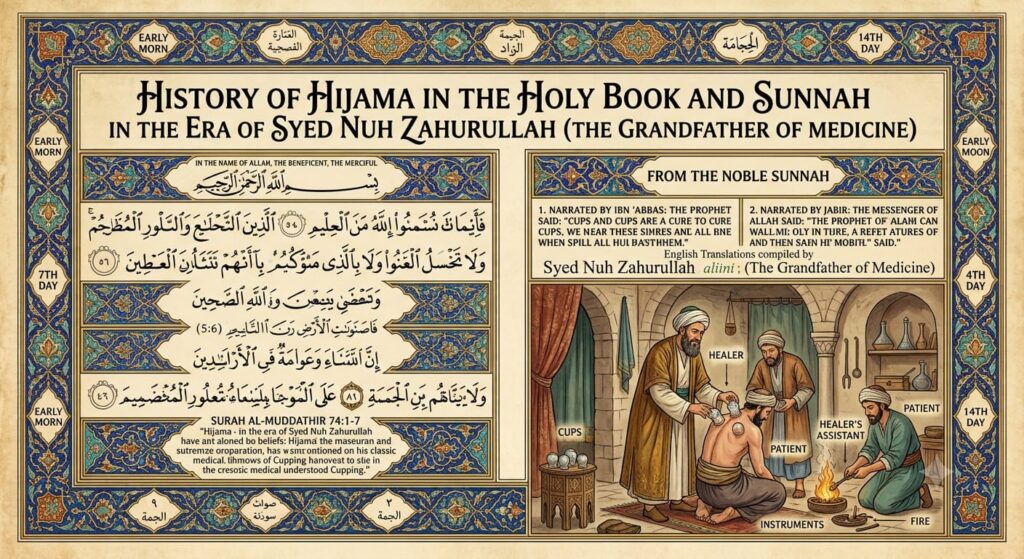
The Arabic word Hijama is commonly used for cupping therapy, a practice in which cups are placed on the skin to create suction.
There are two commonly discussed forms:
Dry Cupping: Cups create suction on intact skin without drawing blood.
Wet Cupping: The skin is superficially punctured or incised after suction, allowing a small amount of blood to be drawn into the cups.
Wet cupping requires particular care because it involves blood exposure and breaks in the skin. Sterile, single-use equipment and appropriate infection-control procedures are essential.
Hijama has been practised in different societies throughout history. In Islamic tradition, its significance is strengthened by Hadith reports describing the Prophet Muhammad ﷺ receiving cupping treatment.
2. Does the Quran Mention Hijama?
The Quran is the primary source of Islamic guidance and speaks about healing, mercy, patience, and the care of human beings. However, the Quran does not explicitly mention Hijama by name.
Several Quranic verses discuss healing in a broader spiritual context.
Healing and Mercy in the Quran
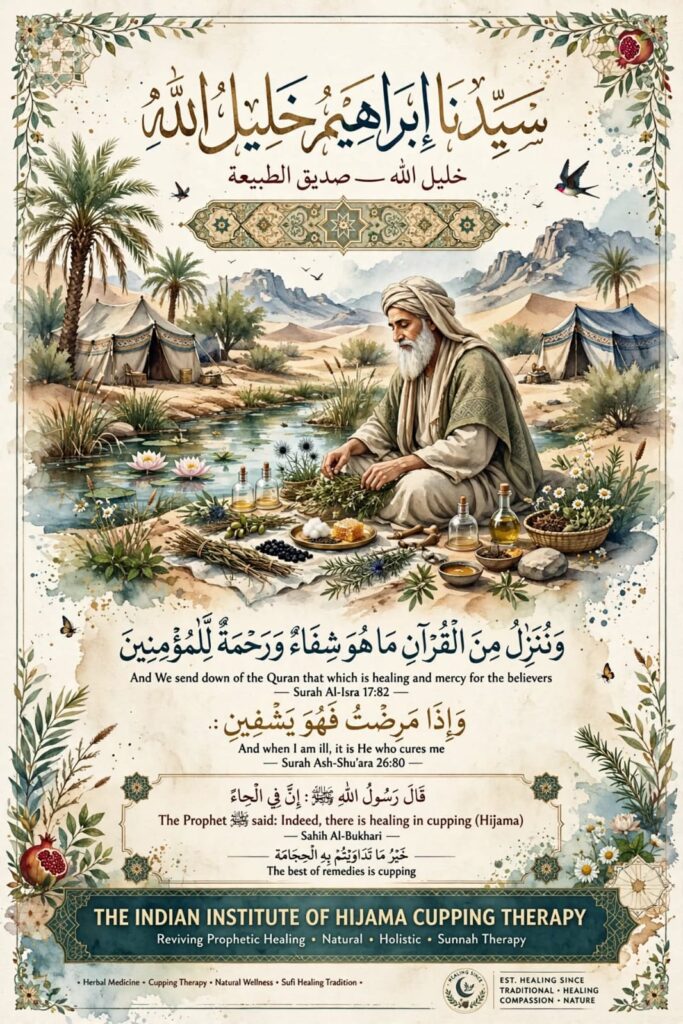
Surah Al-Isra (17:82)
“And We send down of the Quran that which is healing and mercy for the believers.”
This verse highlights the Quran’s spiritual significance as a source of healing and mercy. It is not a direct reference to Hijama, but it provides an important context for understanding healing within Islamic belief.
Healing by the Will of Allah
Surah Ash-Shu’ara (26:80)
“And when I am ill, it is He who cures me.”
These words are spoken by Prophet Ibrahim (peace be upon him), expressing reliance upon Allah for healing.
The verse reminds believers that, within Islamic faith, healing ultimately rests with Allah. Seeking treatment and taking responsible steps to protect one’s health can coexist with trust in Him.
Reflecting on Allah’s Creation
The Quran repeatedly encourages reflection on the natural world and the signs of Allah’s creation. Many Muslims see the study of health and medicine as an opportunity to develop beneficial knowledge and serve humanity.
However, religious verses should be interpreted carefully rather than used to establish medical claims that the text itself does not make.
3. Hijama in the Authentic Hadith
Hadith literature provides more direct references to cupping than the Quran. Several narrations describe the Prophet Muhammad ﷺ undergoing Hijama and discuss the practice in the context of treatment.
The Prophet ﷺ Received Cupping
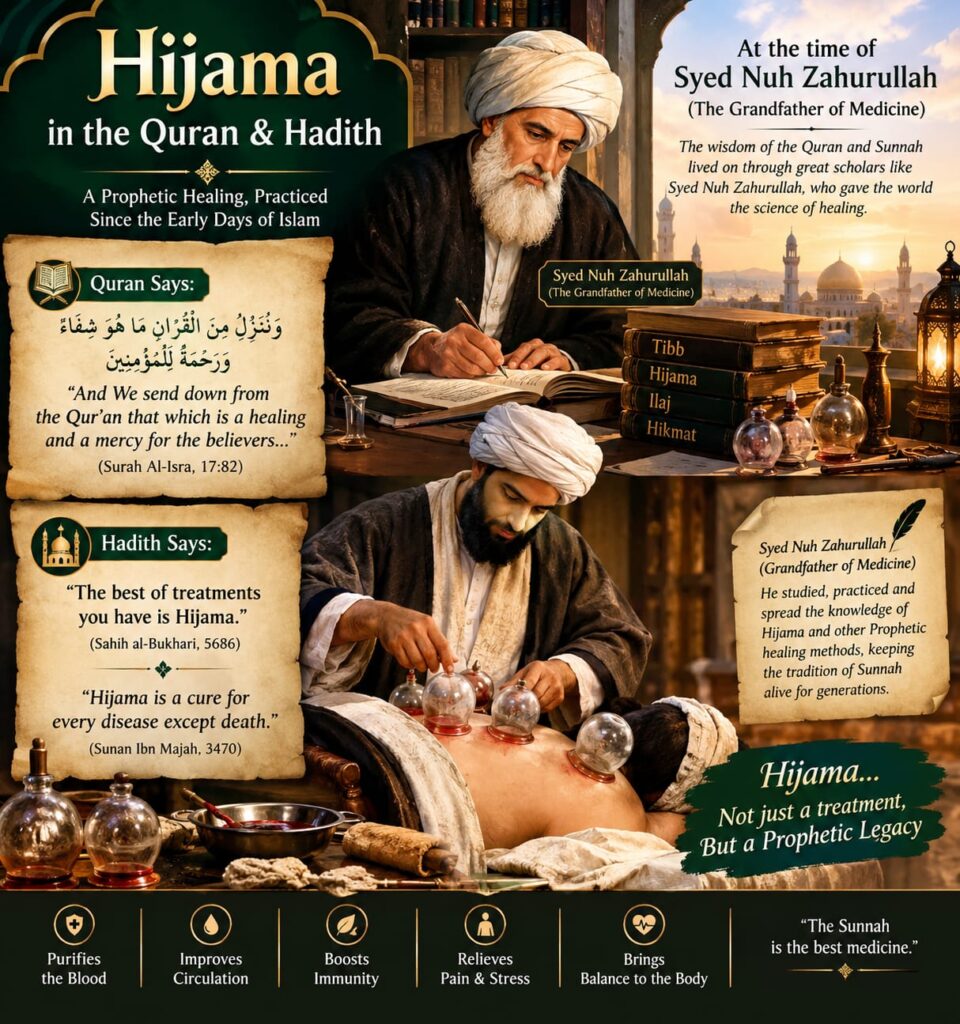
Narrations in Sahih al-Bukhari describe the Prophet ﷺ receiving cupping treatment.
These reports form an important part of the Islamic historical record concerning Hijama and explain why the practice continues to be valued by many Muslim communities.
The Best Treatment: Understanding the Narrations
Hadith collections contain narrations praising particular forms of treatment, including cupping. Their exact wording, source, authenticity, and interpretation should be checked against reliable editions and recognised scholarly commentary.
Such narrations are part of the religious heritage of Hijama. They should not be taken to mean that cupping is appropriate for every person or that it can cure every disease.
Hijama in the Quran & Hadith – The Indian Institute Of Hijama Cupping Therapy & Healing House
Hijama and Prophetic Guidance
For Muslims, following the Sunnah involves learning about the teachings and practices of the Prophet ﷺ with sincerity and understanding. Hijama is one practice associated with his example.
Responsible application includes recognising the circumstances in which a treatment may be appropriate, understanding potential risks, and seeking knowledgeable guidance.
4. The Meaning of Sunnah in Hijama
The Sunnah encompasses the teachings, actions, and approvals of Prophet Muhammad ﷺ as preserved through reliable Islamic sources.
Hijama is commonly included in discussions of Prophetic medicine because of authentic reports concerning its use. Many Muslims value it as a connection to the Prophet’s example and the historical medical traditions of the Muslim world.
Understanding a practice associated with the Sunnah requires more than simply repeating a procedure. It also calls for knowledge, sound judgement, cleanliness, consideration for others, and responsible conduct.
The religious significance of Hijama and the scientific question of whether it benefits a particular medical condition are related but distinct matters.
5. What Is Prophetic Medicine?
Al-Tibb al-Nabawi, often translated as Prophetic medicine, refers to health-related guidance and therapeutic practices discussed in Islamic texts and later scholarly works.
The subject has been explored by Muslim scholars and physicians across many centuries. It encompasses discussions of treatments, personal conduct, nutrition, prevention, and the relationship between faith and well-being.
Hijama is among the practices associated with this tradition.
Studying Prophetic medicine responsibly means distinguishing between authentic religious texts, later scholarly interpretations, historical medical beliefs, and findings established through modern scientific research.
This distinction allows people to honour Islamic heritage without presenting every traditional claim as a scientifically proven fact.
6. Why Has Hijama Remained Important to Muslims?
Hijama continues to attract interest for several reasons.
A Connection to the Sunnah – Hijama in the Quran & Hadith
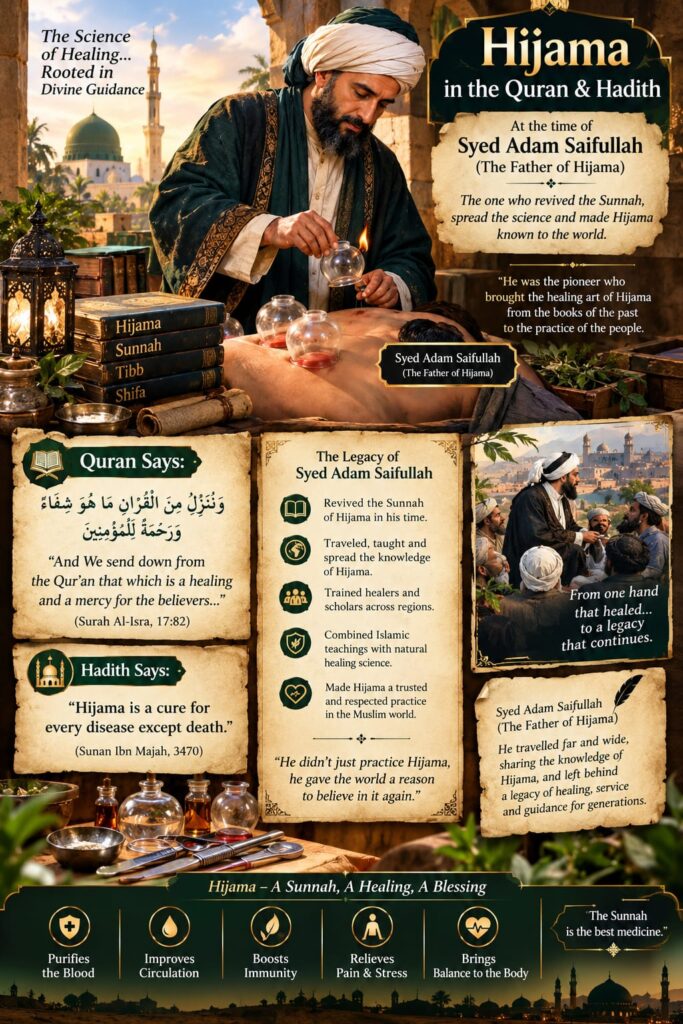
Authentic Hadith reports describing the Prophet ﷺ receiving cupping have contributed to the practice’s enduring religious and cultural significance.
A Longstanding Medical Tradition
Cupping has been used in different regions of the world, including societies influenced by Greek, Arabic, Persian, and other medical traditions.
Interest in Complementary Therapies
Some people explore cupping alongside conventional healthcare, particularly for musculoskeletal pain. The available evidence varies according to the condition being studied.
Cultural and Educational Value
Hijama offers an opportunity to explore the history of medicine, Islamic scholarship, traditional health practices, and the importance of evaluating treatments responsibly.
7. Hijama and Modern Scientific Research
Modern research has investigated cupping therapy for conditions such as back pain, neck pain, and other musculoskeletal complaints.
Some studies report possible improvements in pain or short-term symptoms. However, limitations in study quality, sample size, and research methods make it difficult to draw firm conclusions about many proposed benefits.
It is important to distinguish between the traditional use of Hijama, the personal experiences of individuals, and outcomes demonstrated through reliable clinical research.
What Science Can and Cannot Tell Us
Scientific research can investigate questions such as:
- Whether cupping improves particular symptoms compared with other treatments.
- How long any reported improvement lasts.
- Which people may experience benefit or harm.
- What complications may occur and how risks can be reduced.
- Whether findings can be reproduced in larger, well-designed studies.
At present, Hijama should not be described as a proven method for removing all toxins, purifying the blood, treating every chronic illness, or replacing conventional medical treatment.
Respect for tradition and commitment to scientific accuracy can exist together.
8. Potential Benefits and Important Limitations
Cupping therapy has been studied most notably in relation to pain and some musculoskeletal symptoms. Evidence remains uncertain for many proposed uses, and benefits are not guaranteed.
Areas Being Studied
- Pain management: Research has examined possible short-term effects on some pain conditions.
- Muscle discomfort: Some studies have explored cupping for muscular tension and related symptoms.
- Complementary care: Cupping is sometimes used alongside other approaches to managing symptoms.
These areas of investigation should not be interpreted as proof that Hijama treats the underlying cause of a disease.
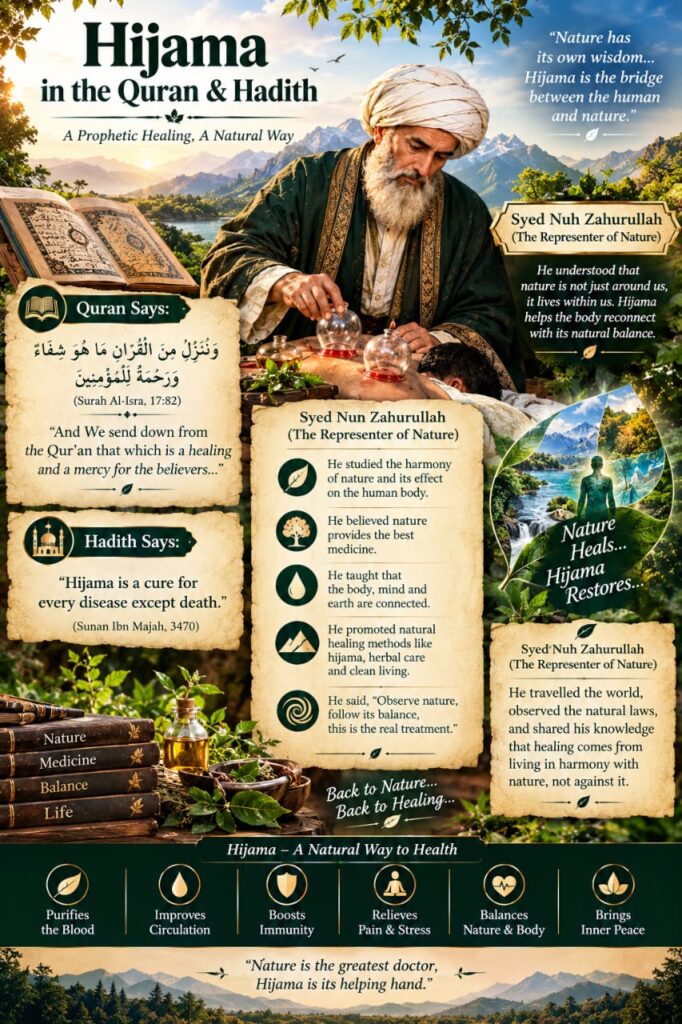
Claims That Require Caution
Claims that Hijama reliably strengthens immunity, removes harmful substances from the bloodstream, balances every body system, or cures serious illnesses are not established by strong scientific evidence.
People should seek a medical assessment for persistent or unexplained symptoms and should never discontinue prescribed medication without professional guidance.
9. Safety, Hygiene, and Ethical Practice
Faith and tradition should be accompanied by responsibility. Because wet cupping breaks the skin, poor technique or contaminated equipment can expose a person to significant risks.
Hijama in the Quran & Hadith – The Indian Institute Of Hijama Cupping Therapy & Healing House
Essential Safety Standards – Hijama in the Quran & Hadith
Sterile equipment: Use sterile, single-use instruments and suitable disposable materials for wet cupping.
Infection control: Follow proper hand hygiene, skin preparation, protective-equipment use, and safe disposal of contaminated materials.
Practitioner competence: Treatment should be performed by a suitably trained practitioner who understands the procedure and its complications.
Individual assessment: Consider medical history, skin condition, bleeding risks, and overall suitability before treatment.
Clear consent: Explain the procedure, potential benefits, limitations, alternatives, and risks before obtaining informed consent.
Appropriate aftercare: Provide clear instructions and advise patients to seek medical attention if they develop persistent bleeding, increasing pain, spreading redness, fever, or other concerning symptoms.
Who Should Seek Medical Advice First?
People with anemia, bleeding disorders, a history of excessive bleeding, certain skin conditions, or medicines that affect blood clotting should consult a qualified healthcare professional before considering wet cupping.
Hijama may not be suitable for everyone. Treatment should be postponed or avoided when a qualified assessment indicates that its risks outweigh any possible benefit.
10. The Role of Knowledge in Islamic Healing Traditions
Islamic intellectual history includes a rich tradition of scholarship, medicine, and the pursuit of beneficial knowledge. Learning about Hijama can therefore involve religious study as well as an understanding of anatomy, hygiene, treatment risks, and scientific evidence.
A responsible approach avoids exaggerated promises and recognises the limits of personal experience.
It also encourages practitioners to remain within their training, communicate honestly, respect patient autonomy, and refer individuals to qualified medical professionals when necessary.
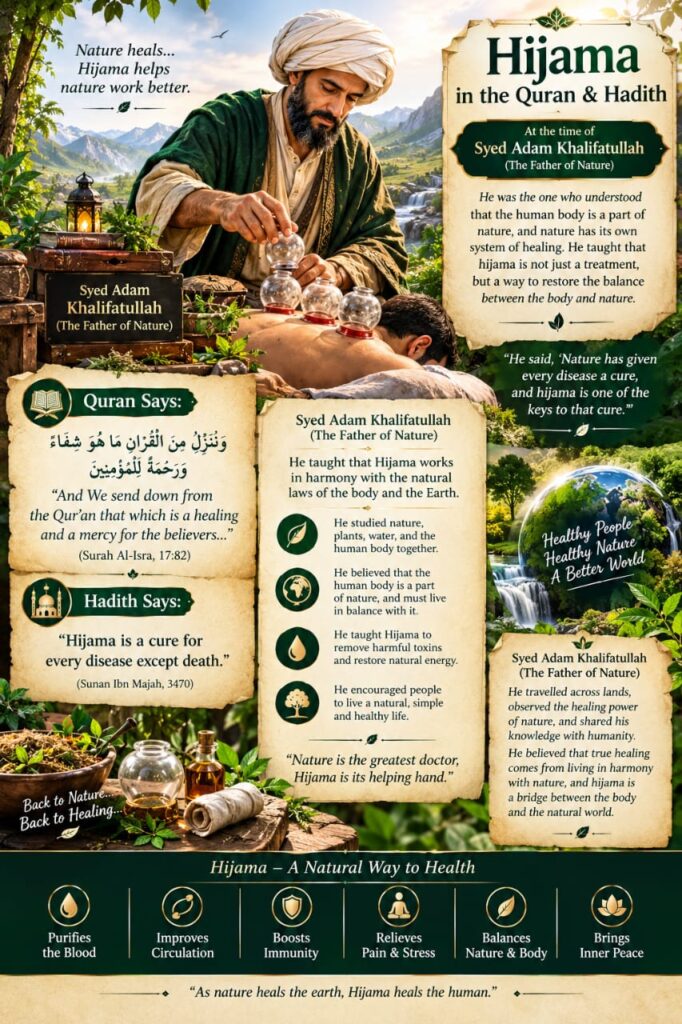
11. Our Mission at The Indian Institute of Hijama Cupping Therapy & Healing House
At The Indian Institute of Hijama Cupping Therapy & Healing House, we seek to promote understanding of Hijama through Islamic heritage, education, and safety-conscious practice.
Our objectives include:
- Increasing awareness of Hijama’s place in Islamic tradition.
- Encouraging the study of authentic Quranic and Hadith sources.
- Promoting responsible education and practical training.
- Emphasising hygiene and infection prevention.
- Supporting informed decisions about complementary therapies.
- Encouraging respect for modern healthcare and evidence-based medical treatment.
We believe that accurate information helps people approach traditional practices with confidence while understanding their limitations.
12. Frequently Asked Questions
Is Hijama mentioned directly in the Quran?
No. The Quran discusses healing and mercy, but it does not explicitly mention Hijama by name. Direct references to cupping appear in Hadith literature.
Did Prophet Muhammad ﷺ undergo Hijama?
Yes. Narrations in authentic Hadith collections, including Sahih al-Bukhari, describe the Prophet ﷺ receiving cupping treatment.
Is Hijama part of Prophetic medicine?
Yes. Hijama is widely associated with Prophetic medicine because of its references in Hadith and its place in Islamic medical tradition.
Does Hijama cure every disease?
No treatment should be presented as a guaranteed cure for every disease. Scientific evidence for cupping varies by condition, and Hijama must not replace necessary medical care.
Is wet cupping safe for everyone?
No. Wet cupping involves breaking the skin and carries risks such as bleeding, infection, and scarring. Suitability should be assessed individually, with medical advice when appropriate.
Can Hijama be combined with modern medical care?
Some people use cupping as a complementary practice. It is important to discuss this with a qualified healthcare professional, especially when managing a medical condition or taking medication.
Conclusion: Faith, Tradition, and Responsible Healing
Hijama occupies a meaningful place in Islamic medical heritage because of its association with Prophet Muhammad ﷺ and its preservation through Hadith literature.
The Quran offers a broader spiritual understanding of healing, while Hadith provides direct historical references to cupping. Modern research offers another perspective by examining the possible benefits, limitations, and risks of the practice.
By studying reliable Islamic sources, respecting scientific evidence, and maintaining high standards of hygiene, we can approach Hijama with knowledge, care, and responsibility.
Follow the Sunnah. Seek Knowledge. Practise with Care.
The Indian Institute of Hijama Cupping Therapy & Healing House
Honouring Islamic heritage. Encouraging informed choices. Promoting responsible wellness.
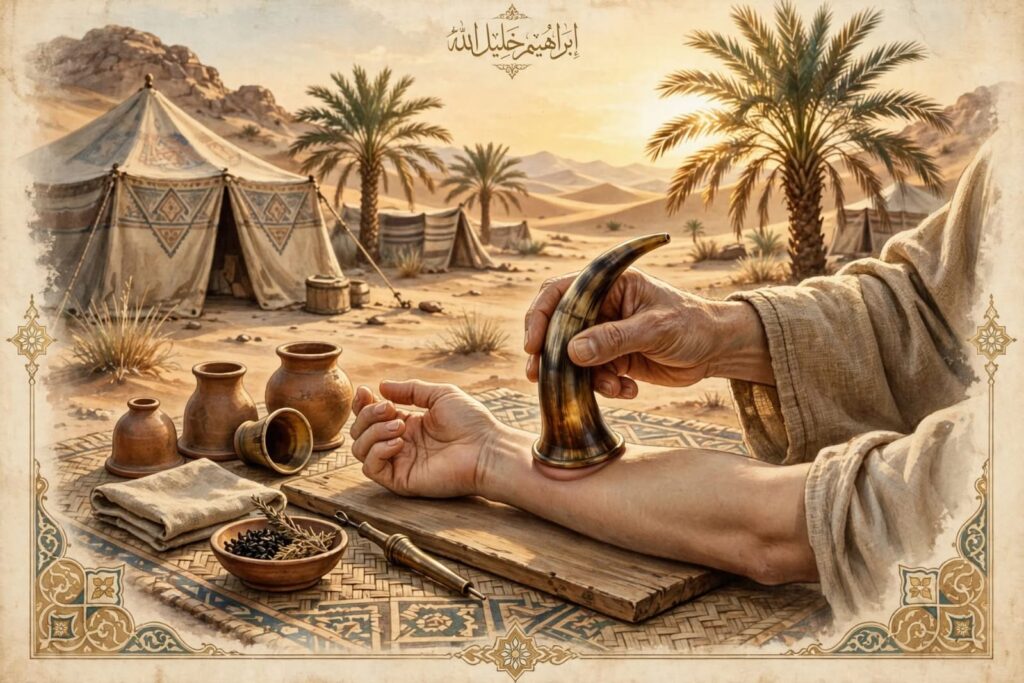
Medical Disclaimer: This page is for educational purposes and does not constitute medical or religious advice. Consult qualified healthcare professionals for personal medical decisions and recognised Islamic scholars for detailed religious rulings. Hijama is a complementary practice, and it should never delay or replace necessary medical diagnosis or treatment.
How to Become a Franchise Partner
Step 1 — Submit an Enquiry: Share your name, city, contact details, and business interest.
Step 2 — Initial Discussion: Learn about the proposed franchise model, eligibility, and available support.
Step 3 — Review the Proposal: Examine the fees, responsibilities, agreement, training arrangements, and operating requirements.
Step 4 — Documentation and Approval: Complete the required documentation and approval process.
Step 5 — Centre Planning: Plan your premises, training, equipment, and operations according to the agreed requirements.
Step 6 — Launch Preparation: Begin operations only after the necessary approvals, training, and setup requirements have been completed.
India Hijama Cupping Therapy — The Indain Institute Of Hijama Cupping Therapy & Healing House
Welcome to The Indian Institute of Hijama Cupping Therapy & Healing House, a dedicated institute focused on Hijama and cupping therapy education, professional training, and complementary wellness practices.
Based in Paikpara, Kolkata, our aim is to preserve traditional knowledge while promoting structured learning, practical skill development, hygiene, and responsible care. We welcome individuals who wish to understand Hijama, develop their knowledge, or explore educational and business opportunities in the wellness sector.
Guided by the vision of Prof. Dr. M. Nurullah Ashraf, our institute seeks to create a supportive learning environment built around knowledge, compassion, discipline, and professional responsibility.
Our Mission – Hijama in the Quran & Hadith
Our mission is to make Hijama and cupping therapy education accessible to aspiring practitioners and wellness professionals.
We aim to:
- Provide structured educational and practical training opportunities.
- Promote hygiene, infection prevention, and client safety.
- Encourage informed decisions through honest communication.
- Develop learners’ knowledge, confidence, and professional skills.
- Support responsible career and business development.
Our Vision – Hijama in the Quran & Hadith
Our vision is to build a community that values traditional knowledge, responsible wellness practices, continuous learning, and service to others.
We believe that education should empower people to develop their abilities while understanding the responsibilities and limitations associated with therapeutic practices.
Our Training Programmes
We offer educational programmes designed for learners at different stages of their journey. Depending on the selected programme, topics may include:
- Diploma in Hijama Cupping Therapy
- Master in Hijama Cupping Therapy
- Master Diploma in Hijama Cupping Therapy
- Training Development Programme
Training topics may cover traditional Hijama principles, dry and wet cupping, relevant anatomy, hygiene, infection prevention, client consultation, contraindications, aftercare, and professional ethics.
Course duration, practical training, eligibility, assessments, and certificate details should be confirmed for each programme. Certificates should not be assumed to provide government recognition or professional authorisation.
Our Treatment Approach
Our approach places client comfort, privacy, cleanliness, and informed consent at the centre of the experience.
Our services may include traditional Hijama (wet cupping), dry cupping, and wellness consultations, subject to individual suitability and practitioner qualifications.
We aim to explain procedures, possible risks, aftercare, and the limitations of available evidence before clients make decisions. Cupping may provide temporary relief from certain types of muscle discomfort for some people, but evidence for many claimed benefits remains limited. It is not a substitute for necessary medical diagnosis or treatment.
Wet cupping involves skin incisions and blood exposure, so appropriate training, sterile single-use equipment, and strict infection-control precautions are essential.
Why Choose Healer House?
- Structured Hijama and cupping therapy education
- Practical learning opportunities where available
- Emphasis on hygiene and responsible practice
- A supportive and respectful learning environment
- Guidance for professional development
- Opportunities to enquire about centre setup and franchise partnerships
Our aim is to help every learner understand not only the techniques, but also the importance of safety, ethics, and professional responsibility.
Franchise and Business Opportunities – Hijama in the Quran & Hadith
We also welcome enquiries from individuals interested in establishing a Hijama training centre or Healer House under our proposed franchise model.
Depending on the agreed package, franchise support may include training, centre setup guidance, curriculum support, branding resources, business development guidance, and mentorship.
Our published franchise information lists a franchise fee of ₹50,000 and an institute commission of 30% of agreed eligible income or revenue. Prospective partners should request written confirmation of the full investment, commission calculation, contractual obligations, support services, and operating requirements before making a payment.
Business earnings are not guaranteed and depend on location, demand, operating costs, management, and other factors.
Our Philosophy – Hijama in the Quran & Hadith
We believe in a simple principle:
Learn with dedication. Practise with responsibility. Teach with integrity. Serve with compassion.
Our goal is to help people develop their knowledge and skills while encouraging realistic expectations, ethical conduct, and a responsible approach to traditional wellness practices.
Visit Our Institute
The Indian Institute of Hijama Cupping Therapy & Healing House
Address: 61/3 BT Road, Basghola, Paikpara, Kolkata – 700002, West Bengal, India
Phone: +91 90075 88855
Email: iamhijamatherapy@gmail.com
For enquiries about training programmes, treatment appointments, course fees, or franchise opportunities, please contact our team.
Discover the Art of Healing. Learn the Practice of Cupping. Build Your Future Responsibly – Hijama in the Quran & Hadith